Carter Flett | Manitoba | Welding Art
About the Practice
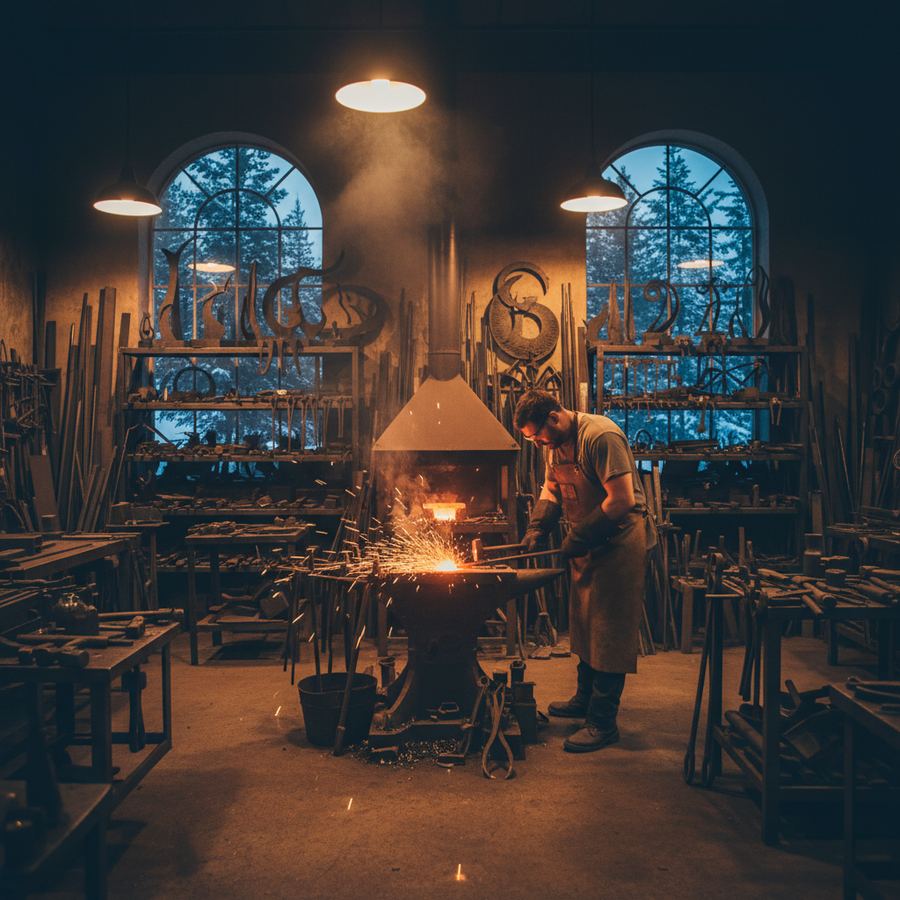
Boreal Iron Works occupies a workshop on a five-acre property outside the town of Lac du Bonnet, Manitoba, approximately 120 kilometres northeast of Winnipeg on the edge of the boreal forest. Welder and sculptor Carter Flett established the studio in 2011 after a fifteen-year career in structural steel fabrication that took him from Winnipeg to Fort McMurray and back. The property borders a stand of spruce and jack pine, and the wildlife that moves through these woods, wolves, owls, bears, moose, foxes, and ravens, provides the primary subject matter for Carter's sculptural practice. The transition from industrial fabrication to art was gradual. Carter began making small animal figures from scrap steel during breaks on job sites, gifts for co-workers and family that gradually grew in ambition and skill until the side project overtook the day job.
Carter is Metis, with family roots in the Red River region going back generations. His connection to the boreal landscape is both personal and cultural. The animals he depicts are not exotic subjects chosen for their visual appeal but neighbours and relatives in the Anishinaabe and Metis understanding of the natural world. This relationship with the subject matter gives the work a quality of familiarity and respect that distinguishes it from purely decorative wildlife art. Carter does not sentimentalize his animals or make them cute. He observes them closely, studies their anatomy and behaviour, and renders them in steel with an honesty that captures their wildness and their dignity.
Wildlife Sculpture
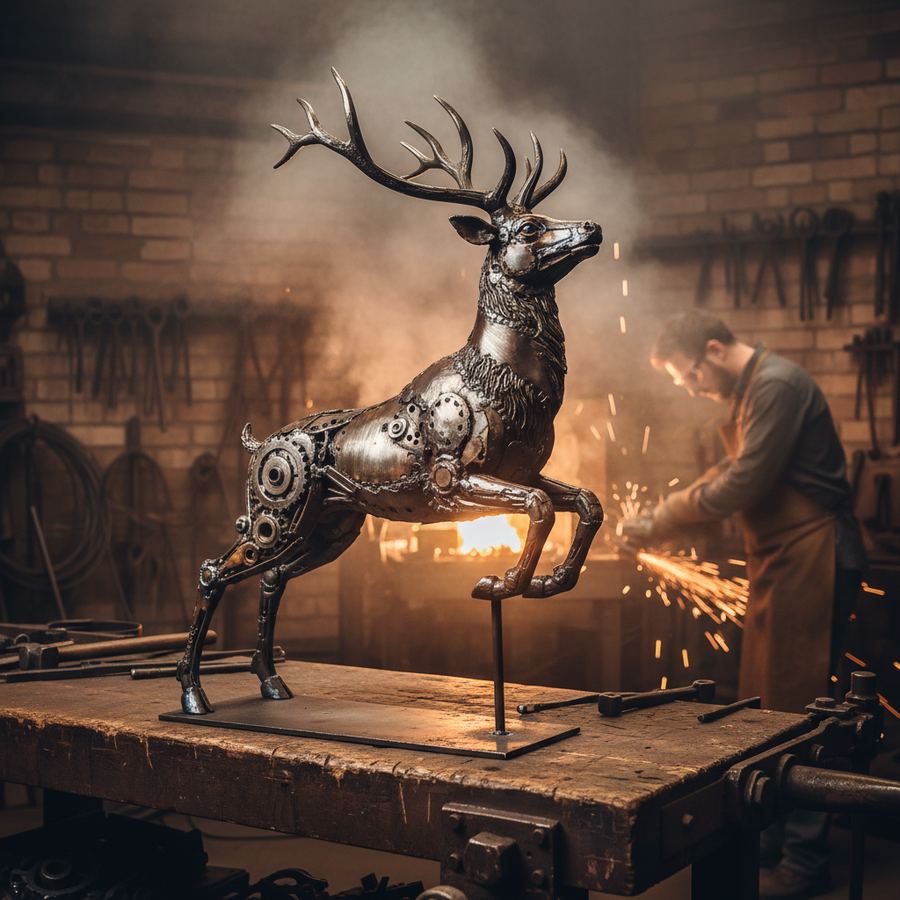
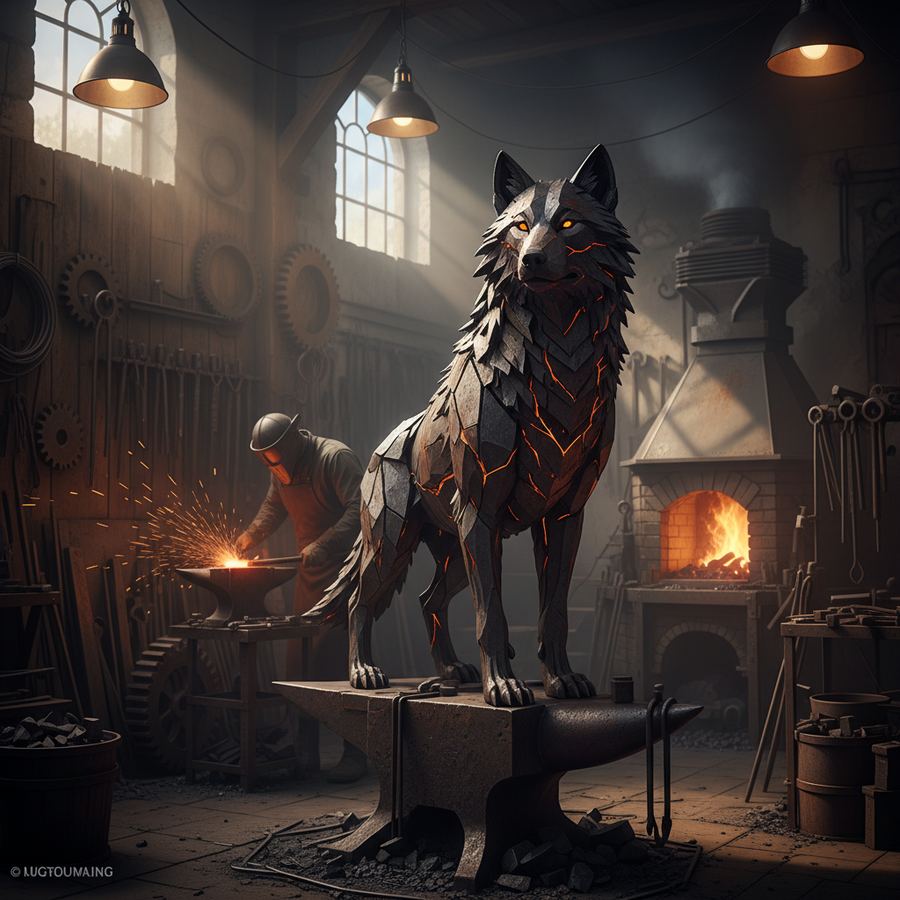
The wildlife sculptures produced at Boreal Iron Works range from tabletop pieces weighing a few pounds to monumental installations exceeding a thousand pounds. Carter's most frequent subjects are wolves, owls, and bears, though he has also produced eagles, bison, lynx, sturgeon, and caribou. His construction technique is additive: he builds forms from hundreds or thousands of individual pieces of steel, cut, bent, and welded together to create surfaces that suggest fur, feathers, or hide without attempting photographic realism. A wolf, for instance, might be composed of overlapping strips of thin plate steel, each strip curved and textured to evoke the layered quality of a winter coat. From a distance, the overall form reads as a wolf in motion. Up close, the surface reveals itself as an intricate mosaic of metal, each piece carrying the marks of the torch, the grinder, and the welder's hand.
This additive technique requires enormous patience and a strong visual sense. Carter works without detailed plans or templates for the surface treatment, building up each area intuitively and stepping back frequently to assess the overall form. He compares the process to carving, except in reverse: where a carver removes material to reveal the form within, Carter adds material to build the form outward from an internal armature. The armature itself is a welded steel skeleton that establishes the animal's pose and proportions. Getting this skeleton right is critical, and Carter may spend days adjusting the angles of legs, the curve of a spine, or the tilt of a head before he is satisfied with the gesture.
Public Art and Commissions
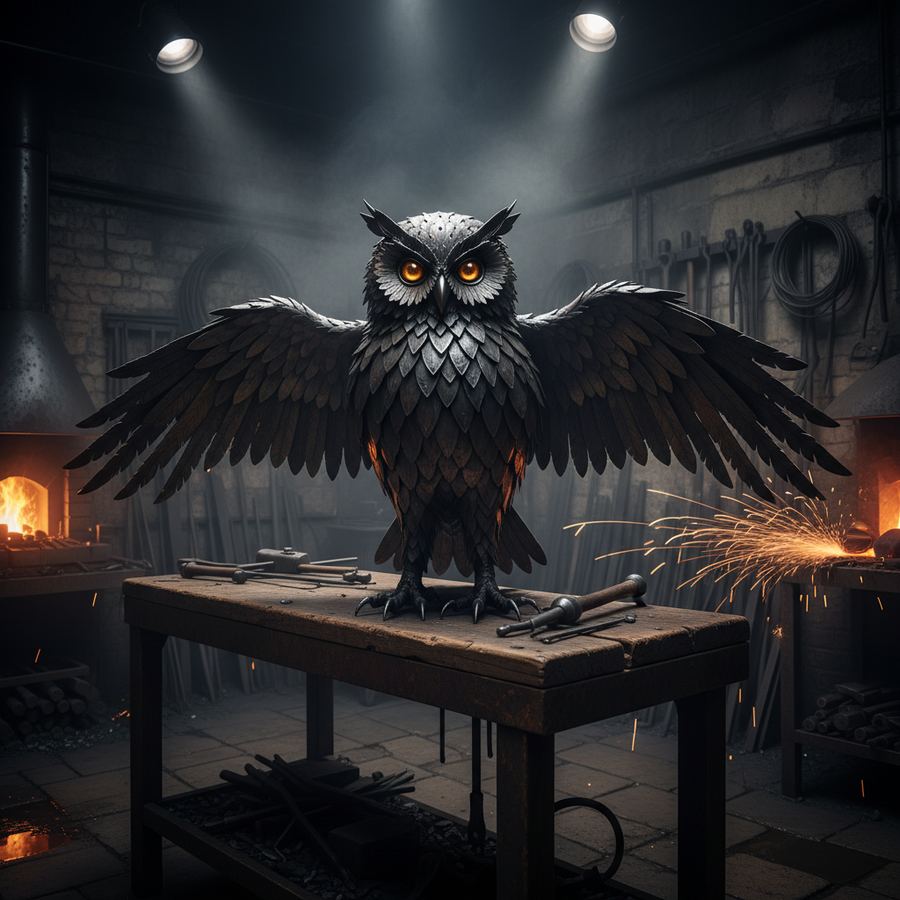
Boreal Iron Works has completed several significant public art commissions across Manitoba and beyond. A seven-foot great grey owl, installed in 2017 at a nature interpretive centre near Pinawa, is among the most recognized. The owl stands on a forged steel branch with its wings partially spread, and its surface of layered steel feathers catches light and shadow in ways that change throughout the day. The installation site was selected to position the sculpture against a backdrop of boreal forest, and visitors frequently photograph the owl as though it were a living bird perched at the edge of the woods.
A pair of wolves, commissioned in 2019 for a community park in Thompson, presented different challenges. The two sculptures, an adult in mid-stride and a younger wolf in a play posture, are installed on a natural rock outcrop and interact with each other across a gap of about three metres. The composition tells a story of connection and movement that invites visitors to walk around and between the figures, discovering new relationships between the forms as their viewpoint changes. Carter spent a week at the site before beginning fabrication, observing how people moved through the park and identifying the rock outcrop as a natural focal point. This attention to site is characteristic of his approach to public work and reflects his belief that sculpture and setting must work together to create a meaningful experience.
Private commissions also form a significant part of the practice. Carter has produced wolf, bear, and eagle sculptures for private residences, corporate lobbies, and resort properties across western Canada. These pieces typically range from three to five feet in height and are designed for both indoor and outdoor display. Clients are drawn to the work's combination of visual power and material durability, and Carter provides detailed installation and maintenance guidance with every piece. For outdoor installations, he recommends a clear lacquer topcoat to slow oxidation while preserving the natural colour of the steel, though some clients prefer to let the rust patina develop freely, integrating the sculpture into its environment over time.
Materials and Workshop
Carter works primarily with mild steel plate in thicknesses ranging from 16 gauge to quarter-inch. He cuts material using a combination of plasma torch and angle grinder, and welds exclusively with MIG equipment, which provides the speed and accessibility he needs when laying down hundreds of small tack welds in a single session. The workshop is organized around efficiency: a cutting station near the door, a welding table at the centre of the room, and a finishing area with grinding and wire-brushing equipment along the far wall. A heavy-duty rotisserie-style stand allows Carter to rotate large sculptures during fabrication, accessing all surfaces without moving the piece to the floor and back.
Scrap and salvage play a meaningful role in the studio's material supply. Carter maintains a yard of salvaged steel collected from farm machinery, decommissioned vehicles, and industrial sites. He sorts this material by type and thickness and draws on it for both structural armatures and surface elements. Some pieces of salvage carry their history visibly: a section of grain auger becomes the ribcage of a bear, or a set of plow discs provides the dished forms that suggest an owl's facial disc. These found-material elements add layers of meaning and visual interest to the work and connect it to the agricultural and industrial heritage of the region.
Community and Culture
Carter's Metis heritage informs his practice in ways that go beyond subject matter. He understands his work as part of a long tradition of Indigenous making and material culture on the northern plains, a tradition that has always adapted to available materials and technologies. Steel is his birch bark, his porcupine quill, his hide. He transforms industrial material into objects that carry cultural meaning and connect people to the natural world, just as Indigenous makers have done with available materials for millennia. This perspective gives the work a philosophical depth that complements its visual impact.
He is active in the Manitoba arts community, exhibiting at galleries in Winnipeg and participating in Indigenous art markets and cultural events. He has also become involved in welding art education, offering workshops for Indigenous youth in northern Manitoba communities through partnerships with friendship centres and community organizations. These workshops introduce basic welding and metalworking skills while encouraging creative expression, and Carter sees them as an investment in the next generation of makers. Several of his former workshop participants have gone on to pursue welding certifications and trades training, and at least two are developing their own sculptural practices.
Boreal Iron Works continues to grow in scope and ambition. Recent projects include a commission for a nine-foot moose sculpture for a provincial park entrance and a self-directed series of smaller bird sculptures exploring the forms of boreal songbirds. Carter's integration of metal art practice with cultural identity and environmental awareness positions the studio at a distinctive intersection in the Canadian metal arts landscape. The work that emerges from the workshop at Lac du Bonnet is unmistakably of its place: grounded in the boreal forest, shaped by the culture and history of the region, and forged with the skills of a tradesperson who found his way from the job site to the studio.