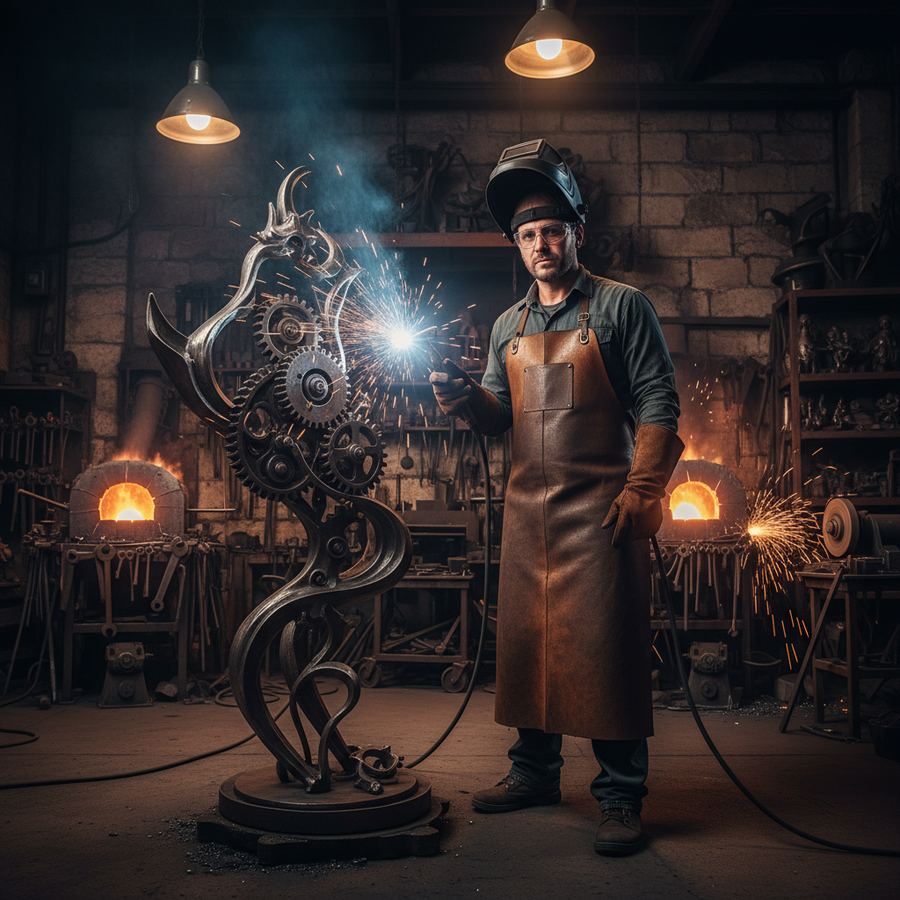
Creative welding from found-object sculpture to architectural fabrication
Where Sparks Meet Vision
Welding art represents one of the most accessible and creatively open entry points into the world of metal arts. Unlike blacksmithing, which requires a forge, an anvil, and a specific set of hand tools, welding can begin with a relatively modest equipment investment and a well-ventilated workspace. A MIG welder, an angle grinder, some clamps, and a supply of steel stock or scrap are enough to start building three-dimensional forms. That low barrier to entry has attracted a remarkably diverse community of makers to the practice, from trained industrial welders who turn their production skills toward creative work on evenings and weekends, to fine art graduates who discover welding as a sculptural medium during residency programs or collaborative projects.
The creative range of welding art in Canada is enormous. At one end of the spectrum, artists collect found objects, salvaged hardware, automotive parts, agricultural implements, and industrial scrap, then reassemble these fragments into figurative or abstract sculptures that carry the history of their source materials. A welded owl made from old wrenches and gears tells a different story than one carved from wood or cast in bronze, and that layered narrative is part of what draws both makers and collectors to found-object work. At the other end, welding artists work with clean new stock, cutting precise shapes from plate steel with plasma cutters or water jets, then joining them into geometric, organic, or architectural forms with TIG, MIG, or stick welding processes.
Technique matters in welding art, but so does surface treatment. Many welding artists grind, polish, and finish their welds until the joints are invisible, creating forms that appear to have been shaped from a single piece of metal. Others celebrate the weld bead as a visual element, leaving beads exposed or exaggerating their texture to create linear patterns across the surface of a sculpture. Patina and paint also play significant roles. Clear-coated raw steel, heat-coloured stainless, rusted Corten, powder-coated colour, and automotive paint finishes all appear in contemporary Canadian welding art, and the choice of surface treatment dramatically affects how a piece reads in a gallery, a garden, or a public space.
Public art commissions have become a significant area of practice for Canadian welding artists. Municipalities, transit authorities, hospitals, and universities regularly commission permanent sculptural works for outdoor plazas, building lobbies, and green spaces. Welded steel is a natural fit for public art because it is structurally strong, weather-resistant when properly finished, and capable of operating at a monumental scale. Several Canadian welding artists maintain fabrication shops that allow them to work on pieces measuring several metres in height and width, and they bring an artisan sensibility to work that might otherwise be produced through purely industrial methods.
For those interested in getting started, a weekend welding art workshop is the ideal first step. Our Welding Art Fundamentals listing covers programs where you will learn to set up and operate a MIG welder, cut and prepare stock, and complete a small sculptural project from start to finish. Many participants arrive with no welding experience at all and leave with a finished piece and the confidence to continue building in their own time. The welding art community in Canada is warm, collaborative, and full of makers who are happy to share tips, lend tools, and celebrate each other's work.
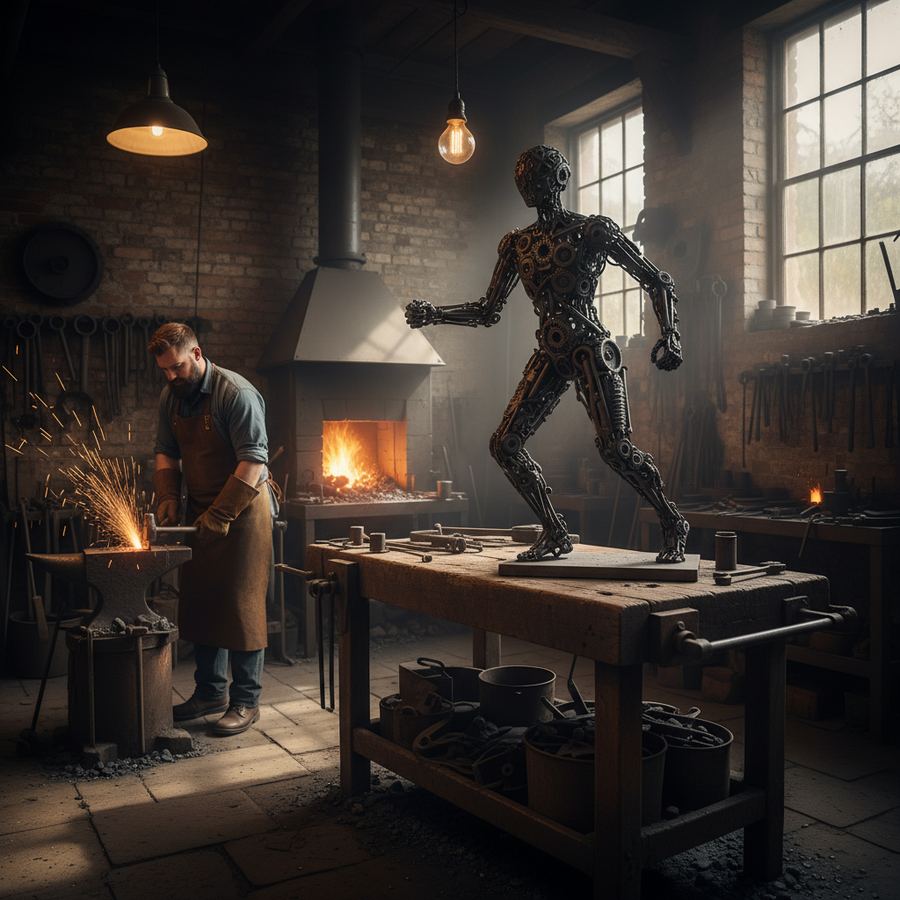
Found-Object Welded Sculpture
A journal feature on the art of building narrative sculpture from salvaged metal, with profiles of Canadian artists who transform scrap into gallery-worthy work.
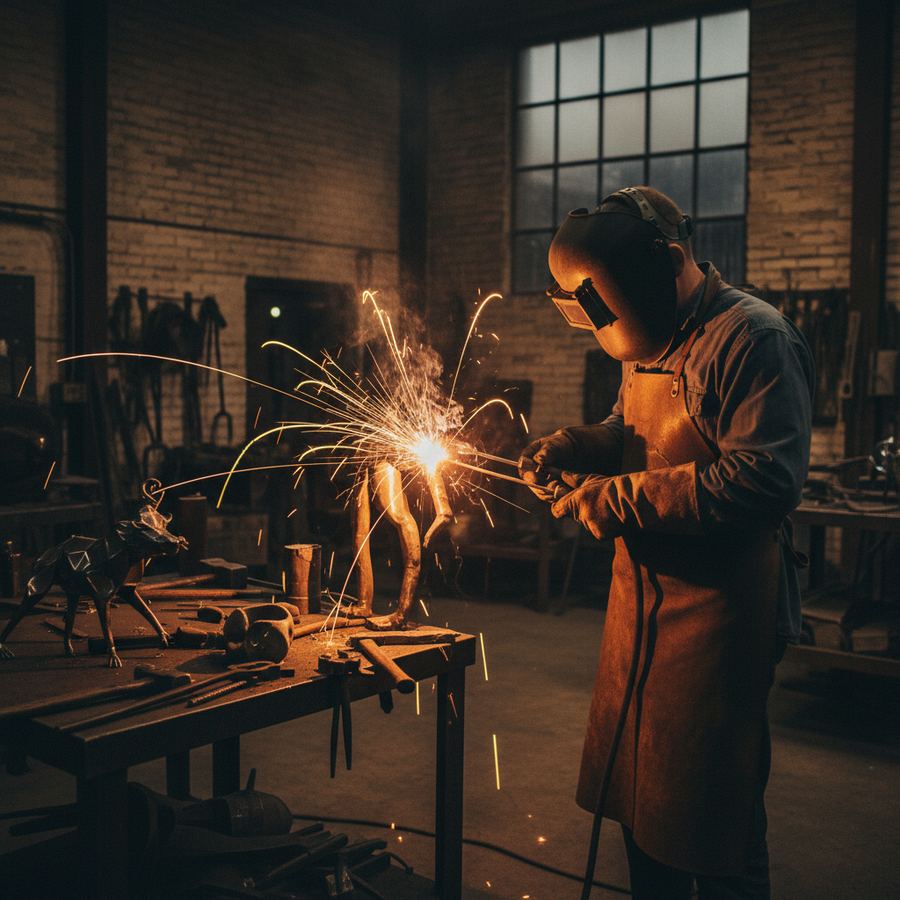
Welding Art Fundamentals Workshop
A hands-on introduction to MIG welding for creative projects. Learn to cut, fit, and weld steel into a small sculpture you take home at the end of the weekend.
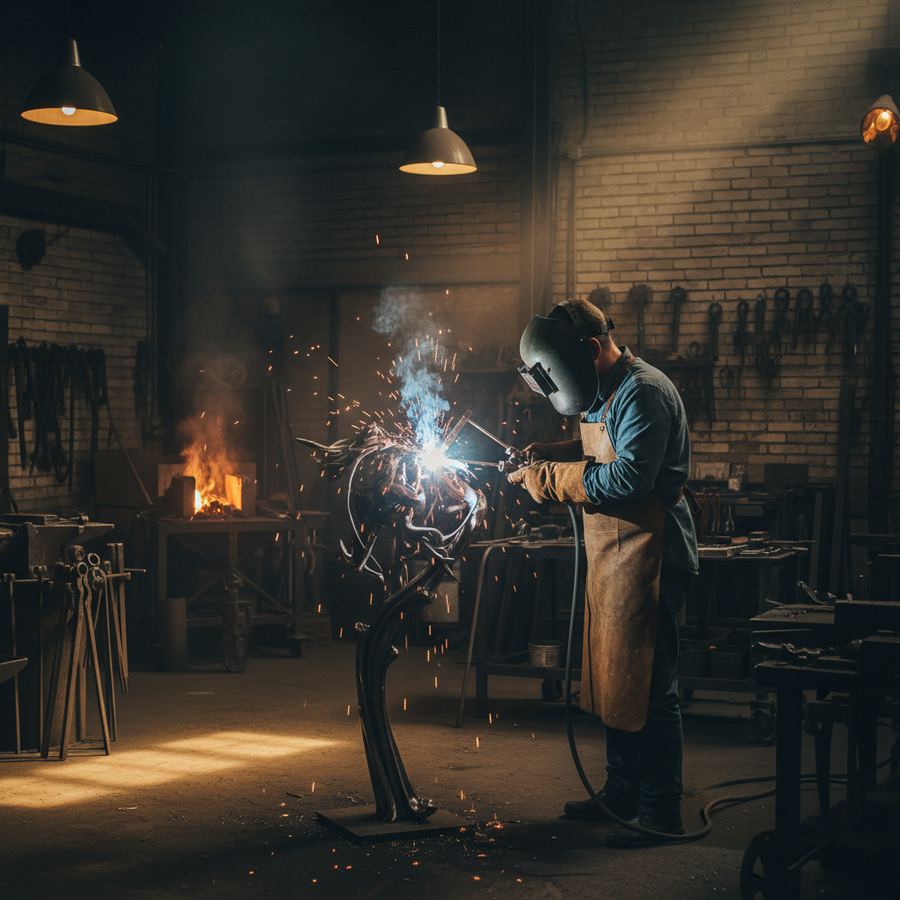
Welding Art as Canadian Craft
An in-depth look at how welding has moved from industrial trade to recognized art form in Canada, and the makers leading that transition.