Metal Arts Guild | September 19, 2025
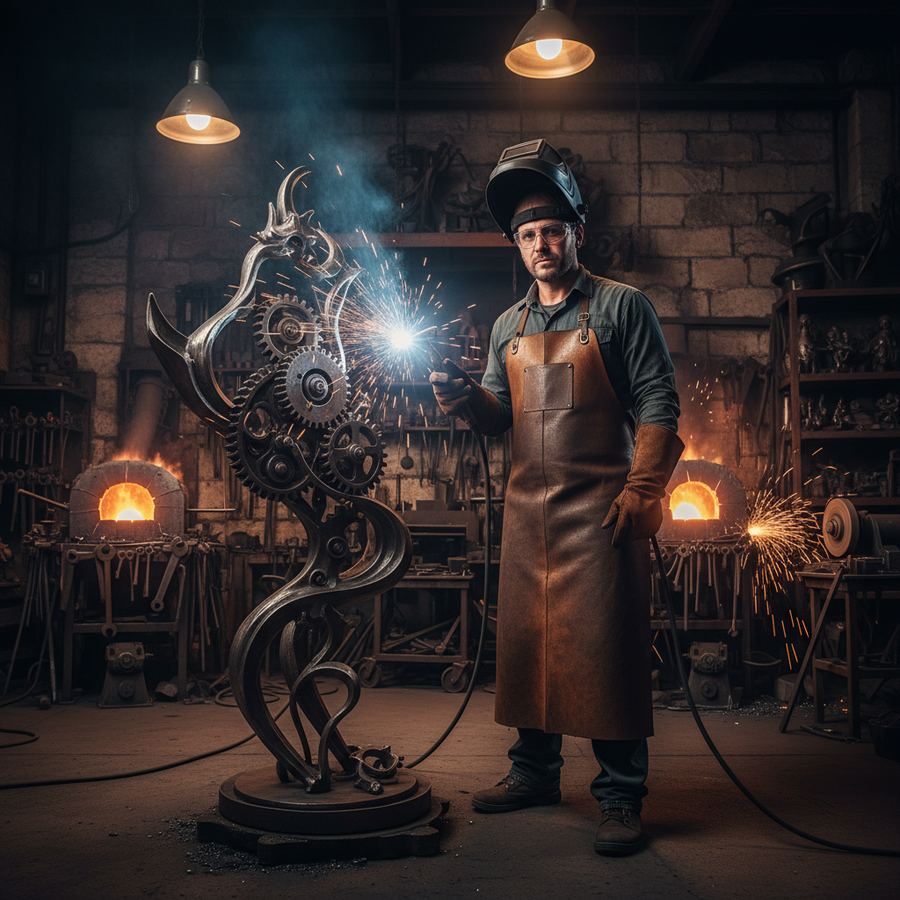
For most of its history, welding was considered a trade, not an art form. It lived in shipyards, pipeline corridors, and fabrication shops. The welder was a skilled technician, not an artist. But over the past few decades, that boundary has blurred beyond recognition. In Canada, a growing number of makers are picking up MIG guns, TIG torches, and stick electrodes not to join structural beams but to create sculpture, furniture, jewellery, and mixed-media installations that hang in galleries and stand in public parks.
The shift did not happen overnight. It grew out of several converging trends: the broader craft revival that brought renewed respect to handwork of all kinds, the availability of affordable welding equipment, and the influence of artists in the United States and Europe who demonstrated that welded steel could be as expressive as carved stone or cast bronze.
Why Welding Appeals to Artists
Welding offers something that few other metalworking methods can match: speed and structural strength. A blacksmith may spend hours forging a single element. A welder can cut, fit, and join complex assemblies in a fraction of that time. This makes welding especially attractive for large-scale work, where the sheer volume of material would make forging impractical. It also allows for a more spontaneous, improvisational approach to building form. Many welding artists work the way a jazz musician plays, making decisions in the moment, responding to what the emerging shape suggests.
The range of processes available adds further versatility. MIG welding is fast and forgiving, ideal for heavy structural work and thick plate. TIG welding offers precision and clean aesthetics, making it the method of choice for stainless steel, aluminum, and visible seams where the weld bead itself becomes a design element. Oxy-acetylene welding and brazing open doors to thinner materials and mixed-metal joining. Each process has its own character, and experienced welding artists often move between them within a single piece.
The Canadian Welding Art Scene
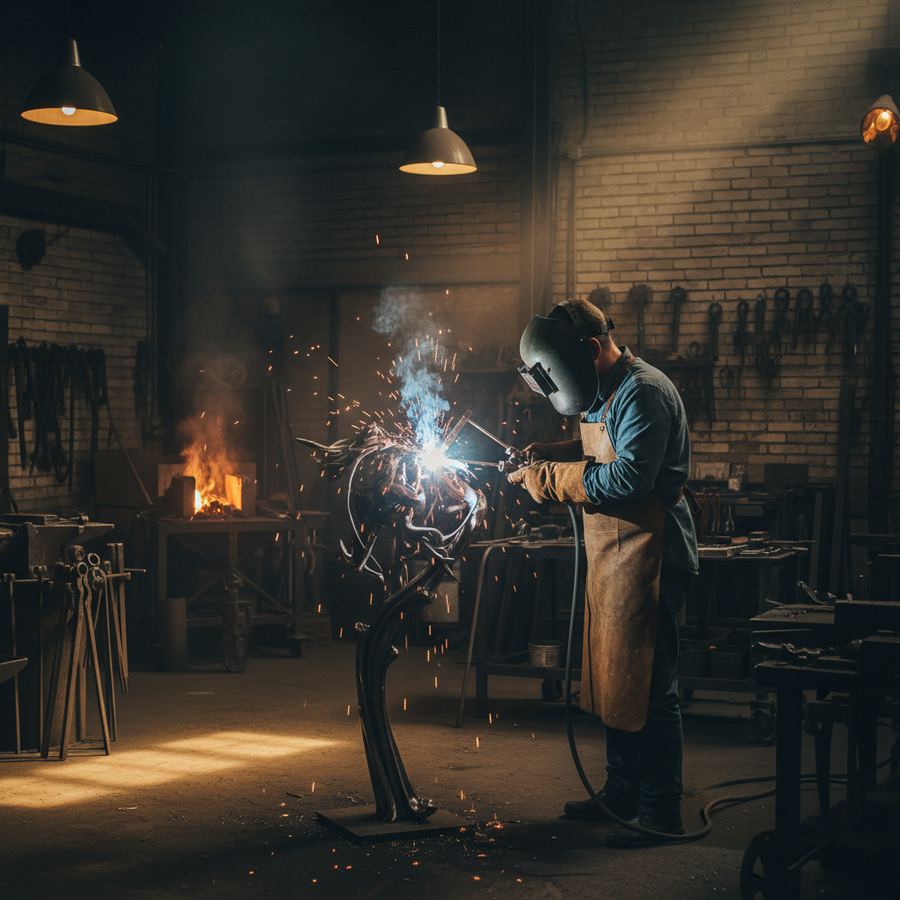
Canada's welding art community is diverse and decentralized. There is no single school or movement that defines it. Instead, you find individual artists scattered across the country, each developing a personal vocabulary within the medium. In British Columbia, several makers focus on marine and wildlife themes, building life-sized or larger animal forms from plate steel and reclaimed industrial material. On the Prairies, the vast landscape inspires monumental work that engages with horizon lines and open space. In Ontario and Quebec, the proximity to galleries and collectors supports more conceptual and gallery-oriented practices.
What these artists share is a comfort with industrial materials and processes that would have seemed out of place in a fine art context a generation ago. Steel plate, angle iron, rebar, expanded metal, and pipe are not just structural necessities. They are aesthetic choices, selected for colour, texture, weight, and the associations they carry. A sculpture built from reclaimed farm equipment speaks differently than one made from polished stainless sheet, even if the forms are similar.
From Shop to Gallery
One of the ongoing challenges for welding artists in Canada is the institutional divide between craft, trade, and fine art. Galleries that show painting and sculpture sometimes hesitate to exhibit welded work, associating it more with skilled labour than creative expression. Craft organizations, meanwhile, may focus on traditional disciplines like blacksmithing or jewellery and overlook welding as a creative practice.
This is changing, slowly but consistently. Juried exhibitions that welcome metal sculpture have grown in number, and several Canadian shows now feature dedicated categories for welded and fabricated work. Public art programs have been especially receptive, recognizing that welded steel is durable, scalable, and visually striking in outdoor settings. Municipal commissions for parks, transit stations, and civic buildings have given welding artists opportunities to work at a scale and visibility that gallery exhibitions alone cannot provide.
Learning the Craft
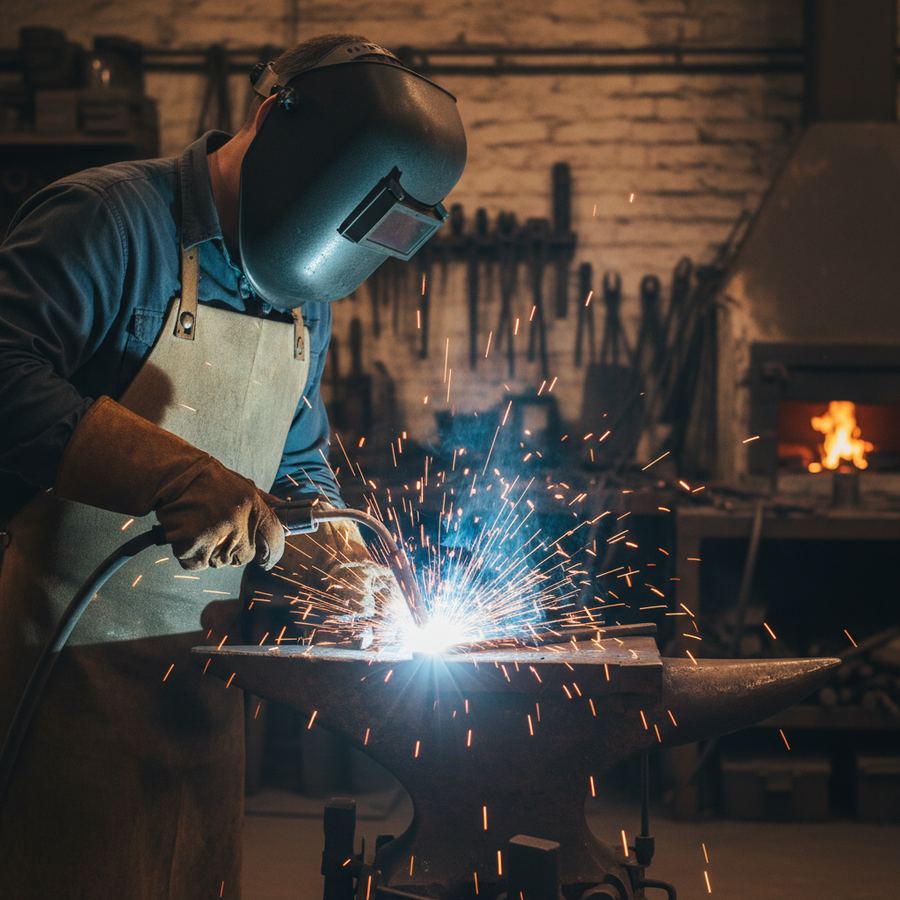
For aspiring welding artists, the path into the field is more accessible than many other metal arts. Community colleges across Canada offer welding certification programs that teach the technical fundamentals. While these programs are trade-oriented, the skills transfer directly to artistic practice. Several specialized workshops have also emerged that teach welding specifically in a creative context, covering topics like sculptural armature building, surface finishing, patina application, and the design principles that distinguish functional fabrication from expressive metalwork.
The relatively low barrier to entry is one of welding art's great strengths. A basic MIG welder, an angle grinder, and some scrap steel are enough to begin. Unlike bronze casting or silversmithing, which require significant infrastructure, a welding practice can start in a garage or backyard shop and grow from there. This accessibility has drawn a wide range of people to the medium, from retired tradespeople exploring creative expression to fine art graduates seeking a new material language.
Material and Meaning
At its best, welding art engages thoughtfully with its materials. Steel rusts, bends, and bears the marks of heat and force. These qualities are not flaws to be hidden but characteristics to be embraced. Many Canadian welding artists deliberately leave surfaces raw or partially rusted, using patinas and clear coats to stabilize the finish while preserving the honest, industrial quality of the steel. Others grind and polish to a mirror finish, transforming the same material into something that reads as precious rather than industrial.
The choice of found versus new material carries meaning too. Artists working with salvaged and found objects bring history and narrative into their work. A sculpture made from old wrenches or railroad spikes inherits the life of those objects. The viewer sees both the new form and the ghost of the original function. This layering of meaning is one of the things that makes welded sculpture so compelling as a contemporary art form.
Welding as art is still a relatively young tradition in Canada, but its trajectory is unmistakable. As more makers discover the creative possibilities of the arc and the torch, and as institutions catch up with what artists have already figured out, the medium will only continue to grow. The sparks are already flying.