Metal Arts Guild | September 5, 2025
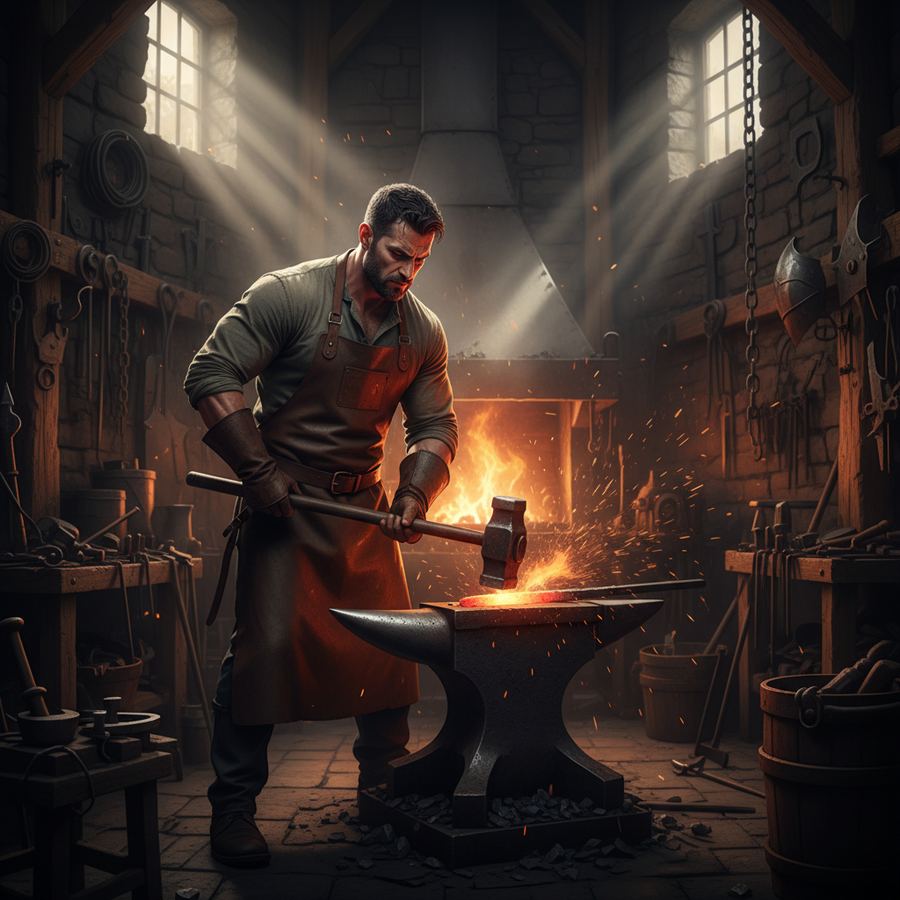
Walk into a Canadian blacksmith shop today and you will find something that might surprise you. Yes, the coal forge still glows, the anvil still rings, and the smith still grips tongs with calloused hands. But the work coming off these anvils looks nothing like the horseshoes and gate hinges of a century ago. Across the country, a new generation of blacksmiths is forging a path that honours tradition while pushing hard into the territory of contemporary art and design.
Canada has always had a quiet but persistent blacksmithing culture. In the early days of settlement, every town needed a smith. They made hardware, tools, and agricultural implements. As industrialization arrived, the village smithy faded, but the craft never truly disappeared. By the 1970s and 1980s, a revival began, driven partly by the back-to-the-land movement and partly by artists who recognized the expressive potential of hot steel. Today that revival has matured into a thriving creative community that stretches from Vancouver Island to Newfoundland.
Where Old Technique Meets New Vision
What makes contemporary Canadian blacksmithing distinctive is its willingness to mix methods. A smith in rural Alberta might use traditional fire welding to join layers of steel for a hand-forged kitchen knife, then switch to a power hammer and plasma cutter for a large-scale public installation. The tools have evolved, but the fundamental relationship between heat, hammer, and metal remains the same. Fire still transforms rigid steel into something plastic, something that can be drawn, upset, twisted, and shaped by a skilled hand.
Many of the country's most respected smiths trained through apprenticeship or intensive workshop programs rather than formal art school. That practical grounding shows in their work. There is a directness and honesty to forged metalwork that comes from understanding material at a physical level. When you have spent hours at the anvil learning how steel moves under the hammer, you develop an intuition for form that no amount of computer modelling can replicate.
Architectural Ironwork and Public Spaces
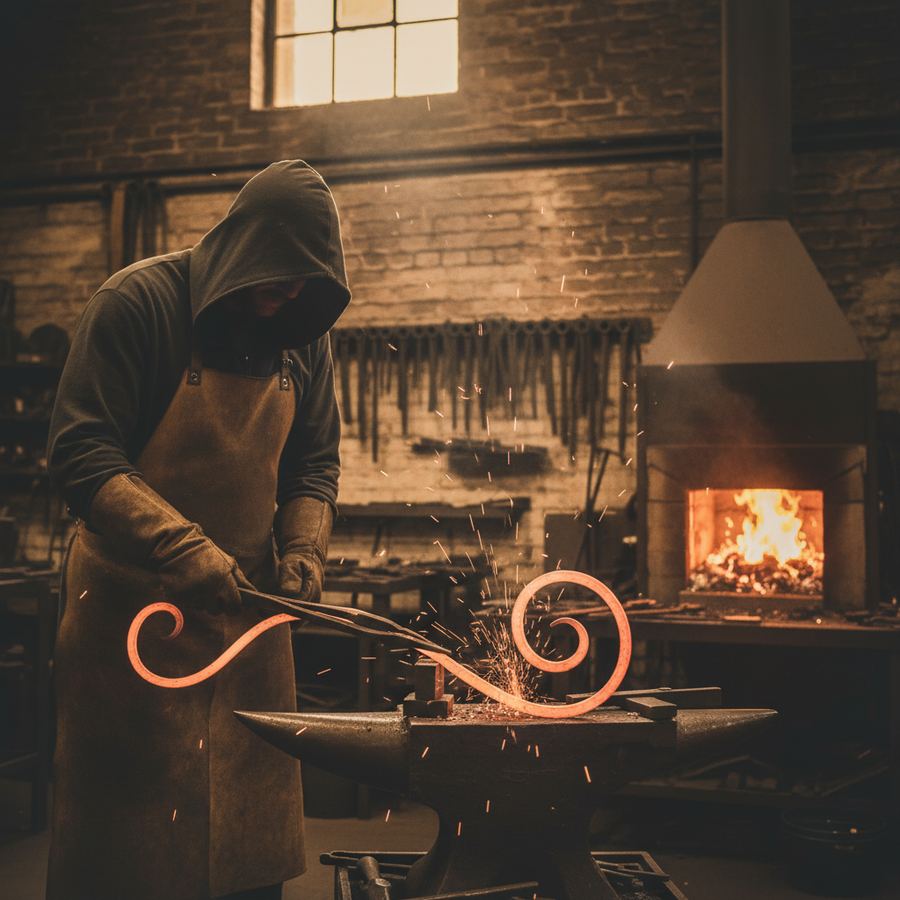
One of the most visible outlets for contemporary blacksmithing in Canada is architectural metalwork. Forged railings, gates, fireplace screens, and lighting fixtures bring handmade character to both residential and commercial buildings. Unlike cast or fabricated metalwork, forged pieces carry the marks of the making process. Hammer texture, subtle asymmetries, and the organic flow of hand-drawn curves give forged ironwork a warmth that machine-made alternatives simply cannot match.
Several Canadian cities have also embraced forged metalwork in public spaces. Park benches with forged armrests, interpretive signs with hand-forged frames, and standalone sculptures in civic plazas all demonstrate the growing acceptance of blacksmithing as a legitimate public art form. Municipal arts councils have begun commissioning smiths alongside painters and sculptors, recognizing that metalwork speaks to both craft heritage and forward-looking design.
The Workshop Culture
A major engine of contemporary blacksmithing in Canada is the workshop circuit. Schools and guilds across the country offer intensive courses ranging from weekend introductions to month-long residencies. These programs serve as incubators where beginners discover the craft and experienced smiths refine specialized skills like damascus steel patterning, repousse, or joinery techniques.
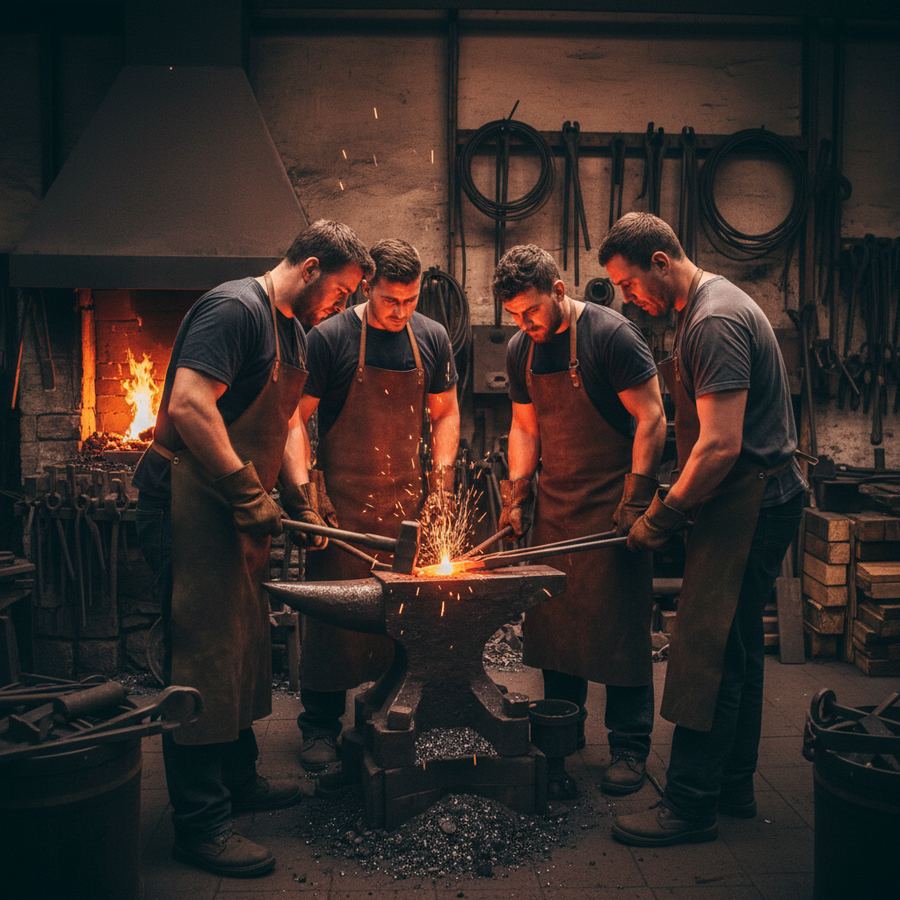
The workshop model also fosters community. Blacksmithing can be a solitary pursuit, especially for rural smiths who may be the only person working a forge within a hundred kilometres. Gathering for a weekend of demonstration, instruction, and shared meals builds connections that sustain makers between events. Online forums and social media have extended these networks, but there is no substitute for standing together around an open forge, watching a master smith coax a leaf from a bar of mild steel.
Challenges and Opportunities
Contemporary blacksmithing in Canada faces real challenges. The cost of setting up a shop continues to climb. Coal and coke are harder to source in some regions, pushing smiths toward gas forges that work well but change the rhythm and feel of the work. Finding affordable studio space, especially near urban centres, can be difficult. And the market for high-end handmade metalwork, while growing, is still relatively small compared to countries like Germany or Japan where craft traditions enjoy stronger institutional support.
Yet there are reasons for optimism. Interest among younger makers is strong, fuelled in part by social media and television programs that have brought the forge into popular culture. The sustainability movement has also helped, as consumers seek out durable, locally made goods over disposable imports. A hand-forged coat hook or candle holder, made by a smith you can name, carries a story and a lifespan that mass-produced alternatives cannot offer.
What Defines the Canadian Approach
If there is a unifying thread in Canadian contemporary blacksmithing, it is a preference for restraint and material honesty. The work tends to be less ornate than European ironwork traditions and less driven by pure novelty than some American art-blacksmithing circles. Canadian smiths often let the steel speak, using minimal embellishment to highlight the qualities of the forged surface itself. There is an affinity with the landscape too: flowing organic lines that echo prairie grasses, boreal forests, and coastal rock formations show up again and again in the work.
This is a craft that rewards patience, physical commitment, and a long apprenticeship with the material. For those willing to put in that time, blacksmithing in Canada offers something increasingly rare in the modern world: a direct, tangible connection between maker, material, and finished object. The forge is hot, the hammer is ready, and the work being produced has never been more inventive.