Metal Arts Guild | January 9, 2026
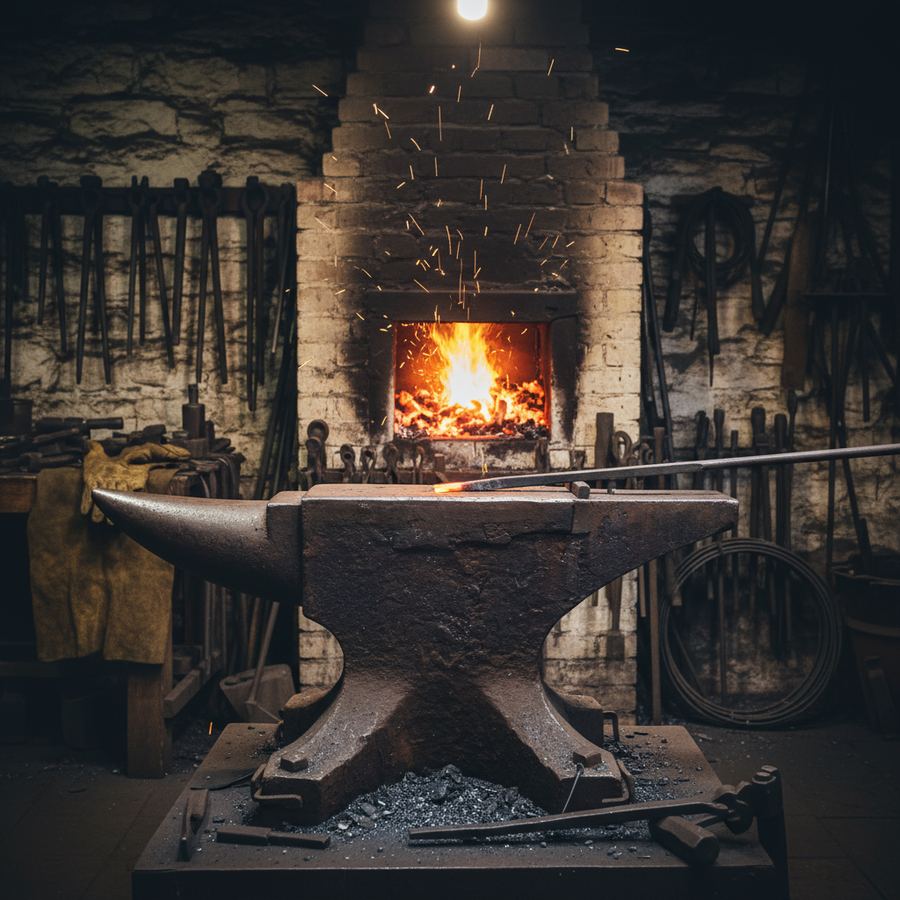
The anvil is the blacksmith's most important tool. It is the surface on which nearly every operation happens, the fixed point against which the hammer does its work. Choosing the right first anvil can make the difference between a frustrating start and a rewarding one, yet the decision is not straightforward. New anvils are expensive. Used anvils vary wildly in quality. Cast iron imposters masquerade as steel on online marketplaces. And well-meaning advice from the internet can be contradictory and confusing. This guide cuts through the noise and offers practical direction for anyone shopping for their first anvil in Canada.
Steel, Not Cast Iron
The single most important rule when buying an anvil is this: it must be made of steel, not cast iron. A proper blacksmithing anvil is either forged from solid tool steel, cast from high-carbon steel, or built with a hardened steel face plate welded onto a cast or wrought iron body. These anvils have a hard, resilient working surface that returns energy from the hammer blow, making your work more efficient and producing cleaner results.
Cast iron anvils, by contrast, are soft and brittle. They absorb hammer energy instead of returning it, making every blow less effective. Worse, they chip and deform quickly under use, creating dangerous sharp edges and an uneven working surface. Cast iron anvil-shaped objects, often sold at hardware stores and online retailers for seemingly attractive prices, are not suitable for blacksmithing. They are decorative items at best. If the price seems too good to be true, it almost certainly is. A real steel anvil in usable condition will cost several hundred dollars minimum. Anything sold new for under a hundred dollars is almost certainly cast iron.
How Much Weight Do You Need
Anvils are sized by weight, and weight matters. A heavier anvil absorbs less energy from each hammer blow, directing more force into the workpiece. This means faster, more efficient forging with less fatigue. For a first anvil, most experienced smiths recommend a minimum of about 100 pounds (roughly 45 kilograms). At this weight, the anvil is heavy enough to be effective for general forging on stock sizes up to about three-quarters of an inch square, which covers a wide range of beginner and intermediate projects.
Heavier is generally better, within reason. A 150- to 200-pound anvil provides a more solid platform and handles larger stock comfortably. However, weight adds cost, and heavy anvils are difficult to move. If you are setting up a permanent shop, go as heavy as your budget allows. If you need portability, or if you are not yet certain that blacksmithing will become a long-term pursuit, a good 100- to 130-pound anvil is a sensible starting point that will serve well for years.
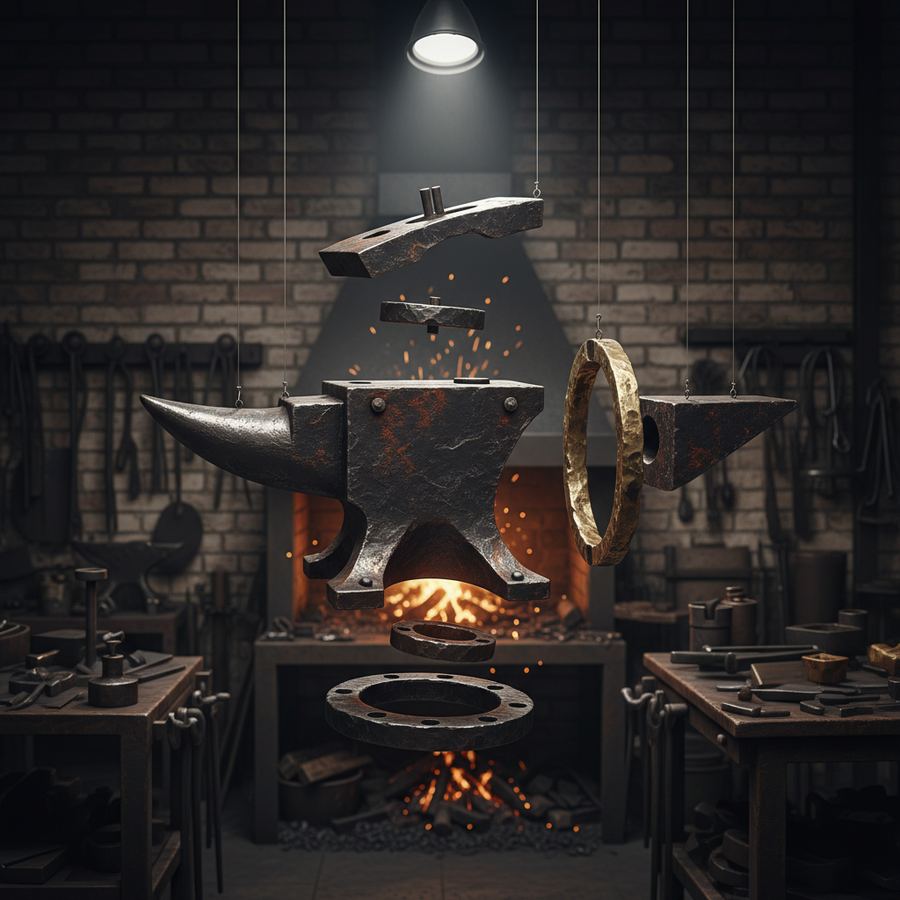
Anatomy of an Anvil
Understanding the parts of an anvil helps you evaluate what you are buying. The face is the flat top surface where most forging happens. It should be smooth, flat, and free of deep gouges or chips. Minor surface wear is acceptable and even desirable on a used anvil, as it indicates the anvil has been used for real work rather than abused. The edges of the face should have at least one section that is sharp and crisp, used for cutting and bending over a defined edge, and one section with a slight radius for general forging without marking the work.
The horn is the conical projection at one end, used for bending, scrolling, and shaping curves. A good horn tapers smoothly from the body to a rounded tip. Horns come in various profiles: some are round in cross-section, others are more oval or slightly flattened on top. For general-purpose work, a round horn is the most versatile.
The hardy hole is a square hole in the face, used to hold bottom tools like hardies, swages, and fullers. A standard hardy hole is about one inch square, though sizes vary. Check that the hardy hole is clean and square, not battered or wallowed out from use. The pritchel hole is a round hole near the hardy hole, used primarily for punching operations. Having both holes in good condition adds significant versatility to the anvil.
New Versus Used
New anvils from reputable manufacturers are the safest purchase. Brands like Peddinghaus, Ridgid, Emerson, and several others produce quality steel anvils that will last multiple lifetimes. The downside is cost. A new 150-pound anvil from a respected maker will typically run between $800 and $1,500 Canadian, depending on the brand and retailer. For a beginner who is not yet sure about their commitment to the craft, that is a significant investment.
Used anvils offer potentially better value but require more knowledge to evaluate. The Canadian used market includes excellent vintage anvils from makers like Peter Wright, Hay-Budden, Fisher, and Trenton, all of which were produced in large numbers and many of which are still in excellent working condition after a century or more of service. Farm auctions, estate sales, and classified listings are the primary sources. Prices for used anvils vary enormously based on condition, weight, brand recognition, and local demand. Expect to pay roughly three to six dollars per pound for a quality used anvil in decent working condition.
What to Look For in a Used Anvil
When inspecting a used anvil, start with the rebound test. Drop a ball bearing or the round end of a ball-peen hammer from about ten inches onto the face. A good steel anvil will produce a lively, high-pitched ring and the ball will bounce back strongly, recovering roughly 70 to 90 percent of the drop height. A dead, thudding response with minimal rebound suggests a cast iron anvil or a steel anvil with a delaminated face plate, either of which should be avoided.
Examine the face carefully. Swayback, a concave dip in the centre of the face from years of use, is common on old anvils. A slight sway is acceptable and can even be useful for straightening work. A deep sway, more than about an eighth of an inch, will require resurfacing before the anvil is fully functional. Check the edges for chips and mushrooming. Moderate edge damage can be dressed with a grinder, but severe chipping that extends deep into the face is harder to repair.
Look at the base and waist of the anvil for cracks. A cracked anvil is generally not worth buying, as the crack will propagate under use and may eventually cause the anvil to break. Check that the anvil sits flat and does not rock on a level surface. A twisted or warped body, while rare, indicates severe abuse or a manufacturing defect.
Mounting Your Anvil
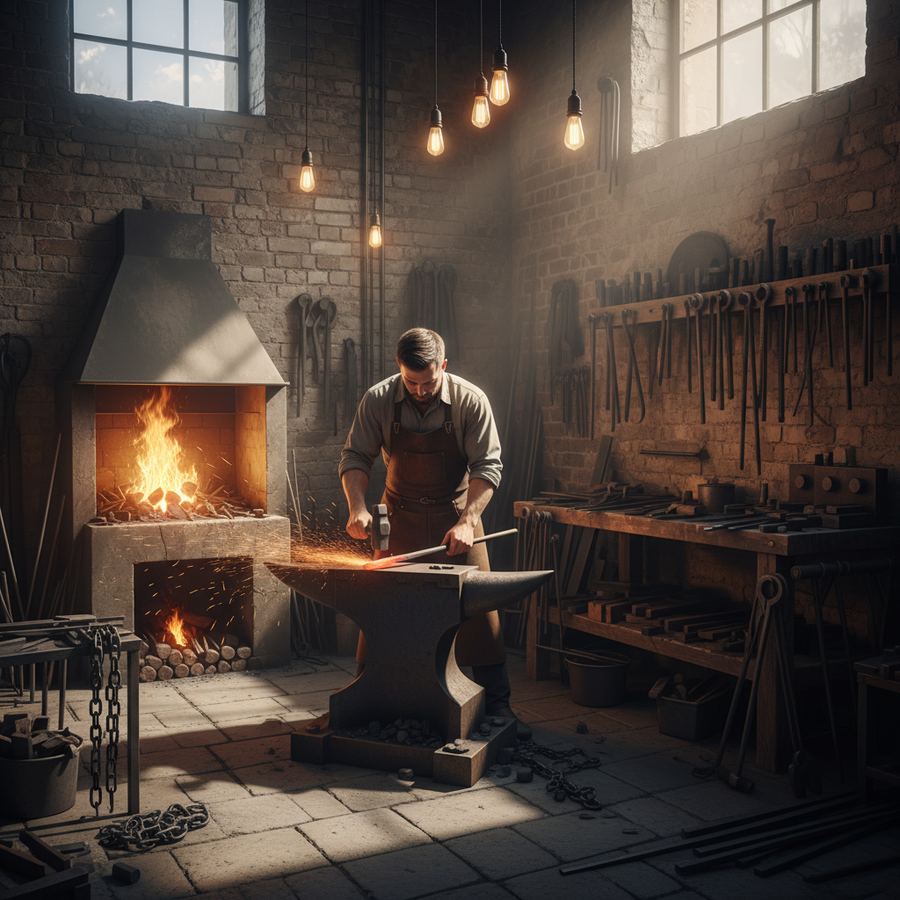
Once you have your anvil, mounting it correctly is essential. The traditional mount is a section of hardwood stump, typically elm, oak, or maple, cut to a height that places the anvil face at the smith's knuckle height when standing with arms relaxed at the sides. The anvil is secured to the stump with steel straps, chains, or bolts. The stump absorbs vibration, provides stability, and positions the anvil at an ergonomic working height.
Steel fabricated stands are another option, especially for smiths who lack access to a large hardwood stump. A well-designed steel stand filled with sand for mass and vibration damping works very well. Some commercial stands are available, or a competent welder can fabricate one from heavy plate and tube steel. Whatever the mounting method, the anvil must be secure. An anvil that shifts or rocks during use is inefficient at best and dangerous at worst.
Where to Buy in Canada
For new anvils, several Canadian farrier and blacksmithing supply retailers stock major brands. Online ordering is common, though shipping costs for a heavy anvil can be substantial. Local pickup, when available, saves significantly. For used anvils, the search requires patience. Farm auction listings, online classifieds, and blacksmithing community forums are the best sources. Let people in the metalworking community know you are looking. Many of the best used anvil deals happen through word of mouth rather than public listings.
The right first anvil will serve you for years, possibly for the rest of your life. Take the time to choose well, and your forging practice will have a solid foundation in every sense of the word.