Metal Arts Guild | November 28, 2025
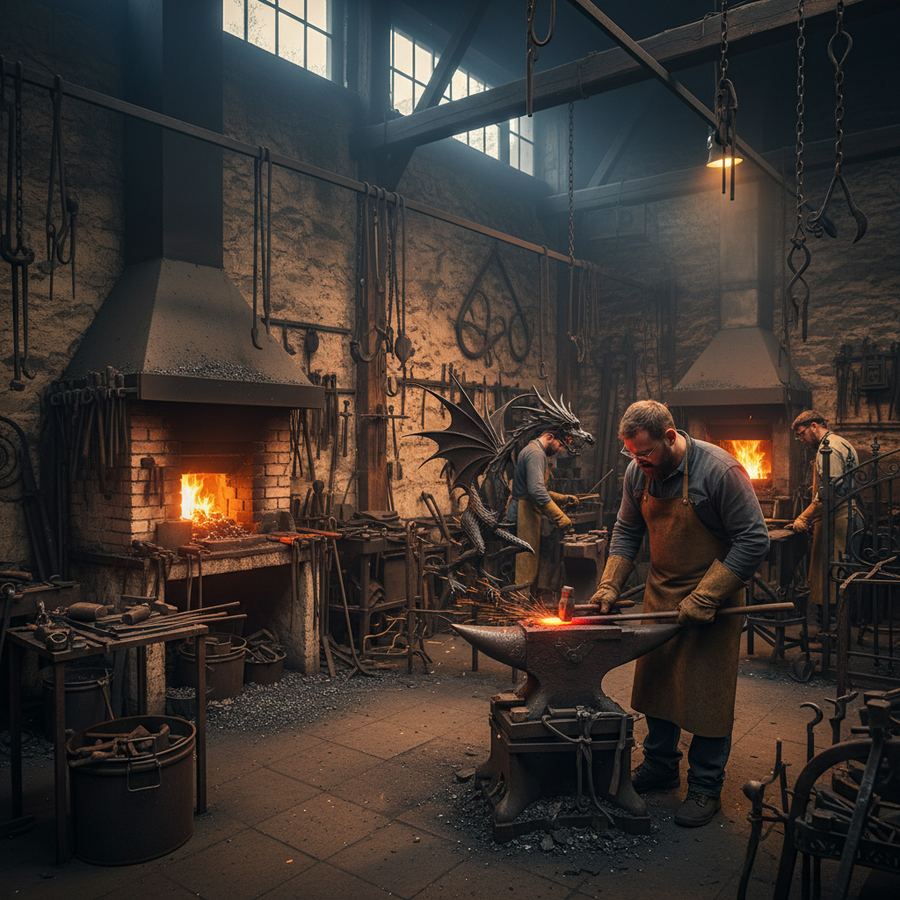
The road to Forge and Flame winds through farmland and second-growth forest before arriving at a cluster of outbuildings behind a modest farmhouse. The largest building, a converted pole barn with a high roofline and wide doors that open to the south, is the smithy. Even before you step inside, you can hear the rhythmic ring of hammer on anvil and catch the faint sulphur smell of coal smoke drifting from the chimney. This is a working blacksmith shop in every sense, a place where metal is transformed daily into objects that are both useful and beautiful.
The shop's founder started forging in the early 2000s after a career in carpentry. The transition from wood to metal was not as dramatic as it might sound. Both crafts demand precision, an understanding of material properties, and the patience to let the work develop at its own pace. What the forge offered that the woodshop did not was fire, and with it, the ability to reshape a rigid material into almost anything the imagination could conceive.
Inside the Shop
Walking through the main doors, the first thing you notice is the layout. Two coal forges sit along the north wall, each with its own chimney and hood. A gas forge, used for longer heats and production work, occupies the corner. Three anvils of different sizes are positioned around the forges, each mounted on heavy stumps at working height. The arrangement allows the smith to move efficiently between fire and anvil, minimizing steps and keeping the hot steel within reach at all times.
The tool wall is a study in organization and craft history. Dozens of hammers hang in rows: cross-peen, ball-peen, rounding, and specialty hammers for texturing and planishing. Many are vintage heads that have been re-handled and dressed. Tongs of every jaw configuration line another section, most of them hand-forged by the shop's owner to fit specific stock sizes and shapes. Hardy tools, swage blocks, and mandrels fill the shelves below. Every tool has a place, and every tool sees regular use.
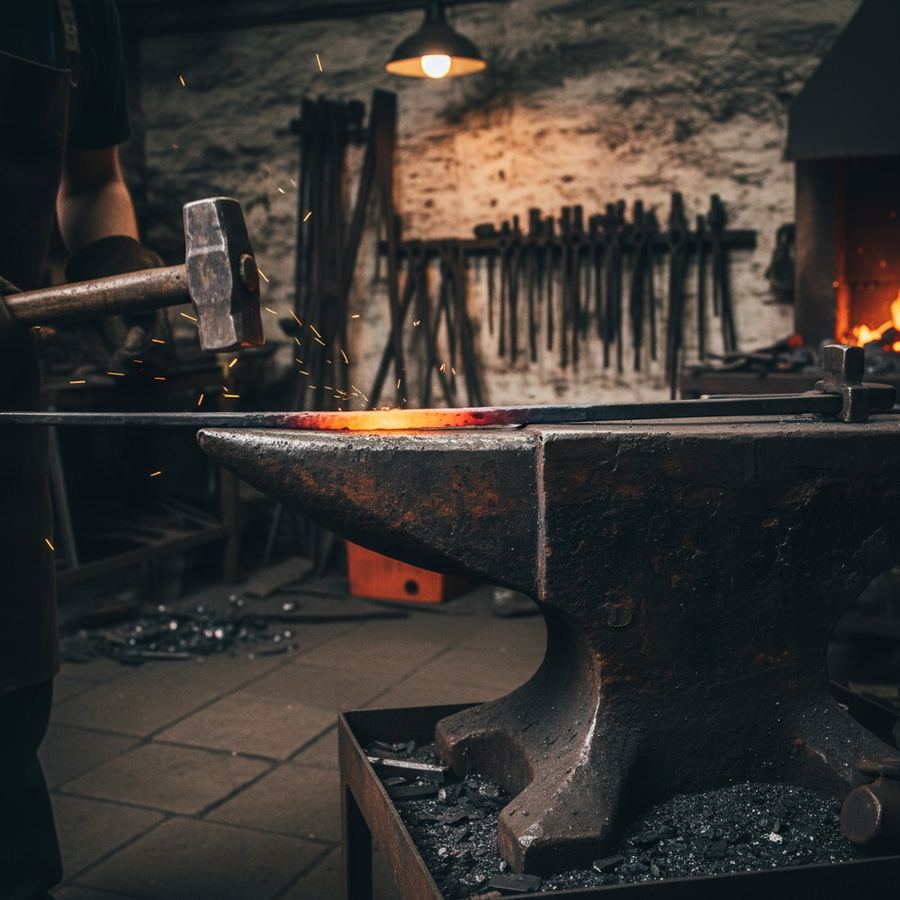
The power equipment is modest but effective. A fifty-pound Little Giant power hammer handles heavy drawing and upsetting. A hydraulic press, built from a shop-fabricated frame and a commercial cylinder, flattens and bends stock that would be exhausting to move by hand. A belt grinder, a drill press, and a cut-off saw round out the machinery. The philosophy here is to let hand tools do the detailed work and power tools handle the heavy lifting, a balance that preserves the character of hand-forged work while respecting the limits of the human body.
The Work
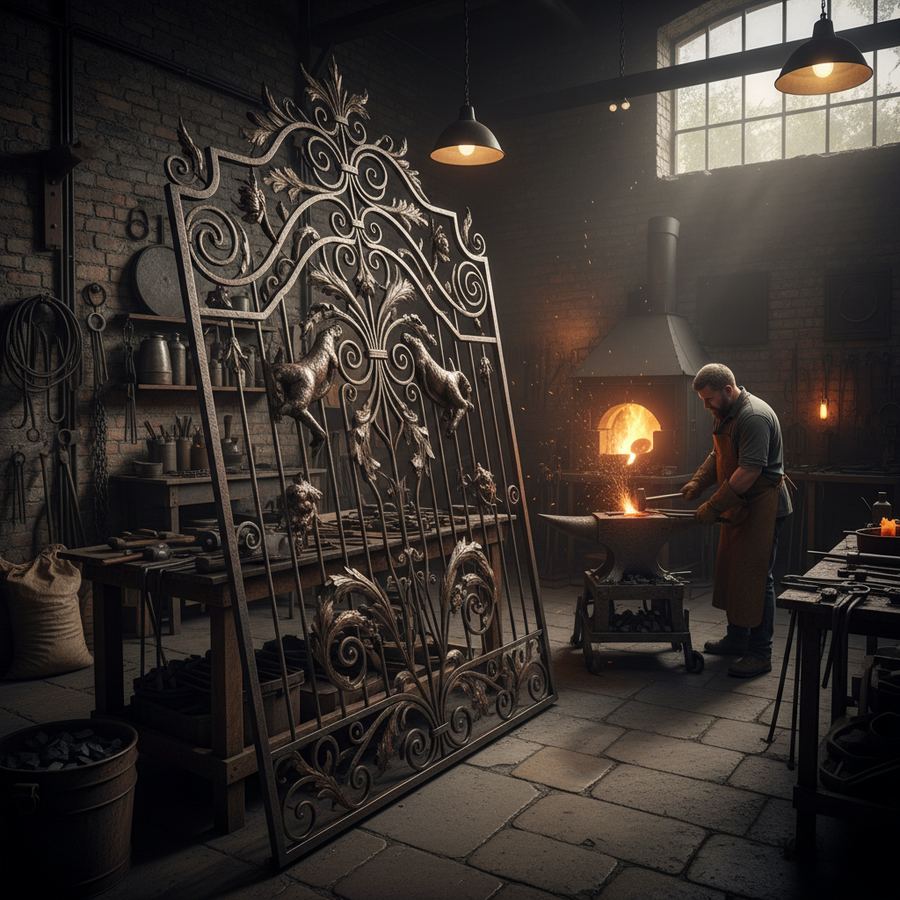
Forge and Flame's output falls into three broad categories: architectural ironwork, custom hardware, and sculptural pieces. Architectural commissions, such as railings, gates, fireplace screens, and light fixtures, form the financial backbone of the business. These projects require close collaboration with architects, builders, and homeowners, translating design concepts into forged reality while meeting building codes and structural requirements.
Custom hardware is a quieter but steady income stream. Hand-forged door handles, cabinet pulls, hinges, hooks, and towel bars appeal to homeowners who want handmade details in their living spaces. These pieces are relatively quick to produce and can be offered in standard designs or fully customized. The tactile quality of forged hardware, the slight warmth of the beeswax finish, the subtle hammer texture underhand, is something that factory hardware simply cannot replicate.
The sculptural work is where the most personal expression happens. Between commissions, the smith turns to pieces driven by curiosity and creative ambition rather than a client brief. Botanical forms, flowing organic lines inspired by plant growth and natural structures, are a recurring theme. These pieces explore the tension between the rigidity of steel and the fluid, curving growth patterns of the natural world. Several have been shown in juried exhibitions and acquired by private collectors.
A Day at the Forge
The working day starts early. By seven in the morning, the coal forge is lit and the first heat is under way. Morning hours are devoted to production work: filling hardware orders, advancing commission pieces, and handling the repetitive elements that every project requires. There is a meditative rhythm to this work. Heat, hammer, check, reheat. The body falls into a pattern, and the mind can wander productively, thinking ahead to design problems and upcoming projects.
Afternoons are more varied. Design work happens at a drafting table near the window, where natural light helps with detail sketches and full-scale drawings. Client consultations, material ordering, bookkeeping, and the other administrative tasks of running a small business fill the gaps between forging sessions. One of the realities of professional blacksmithing is that making things at the anvil is only part of the job. Running the business takes nearly as much time as running the forge.
Teaching and Community
Forge and Flame also hosts occasional workshops for beginners and intermediate smiths. These weekend intensives introduce participants to the fundamental forging operations: drawing, tapering, upsetting, bending, twisting, and basic joinery. The shop can accommodate four students comfortably, each working at a dedicated station with a forge and anvil. Teaching, the smith says, keeps the fundamentals sharp and provides a welcome change of pace from the solitary routine of daily production.
The broader blacksmithing community is an important part of the studio's identity. Regular attendance at regional hammer-ins, conferences, and guild meetings provides inspiration, technical knowledge, and the camaraderie of shared craft. The Canadian blacksmithing community is small enough that most active members know each other by name, yet large enough to sustain a genuine exchange of ideas and techniques. This network, informal but real, is one of the things that makes the craft sustainable as a livelihood and not just a hobby.
Challenges of the Small Shop
Running a one-person blacksmithing business is not without its difficulties. Pricing handmade work competitively against mass-produced imports is a constant challenge. Clients who appreciate the value of hand-forged metalwork are willing to pay for quality, but finding those clients requires ongoing marketing effort. The physical demands of the work accumulate over years: joint strain, hearing loss from hammer noise, and the general wear that comes from a physically intense daily practice. Smart smiths invest in ergonomic improvements, hearing protection, and regular breaks, but the nature of the work is inherently demanding.
Despite these challenges, the satisfaction of running a forge is evident in the shop itself. Tools are well-maintained. Work in progress shows care and attention. Finished pieces, waiting for delivery, demonstrate a level of craft that only comes from years of dedicated practice. This is a studio where the work speaks clearly, and what it says is that blacksmithing is alive, relevant, and deeply rewarding for those willing to commit to the anvil.