Metal Arts Guild | December 12, 2025
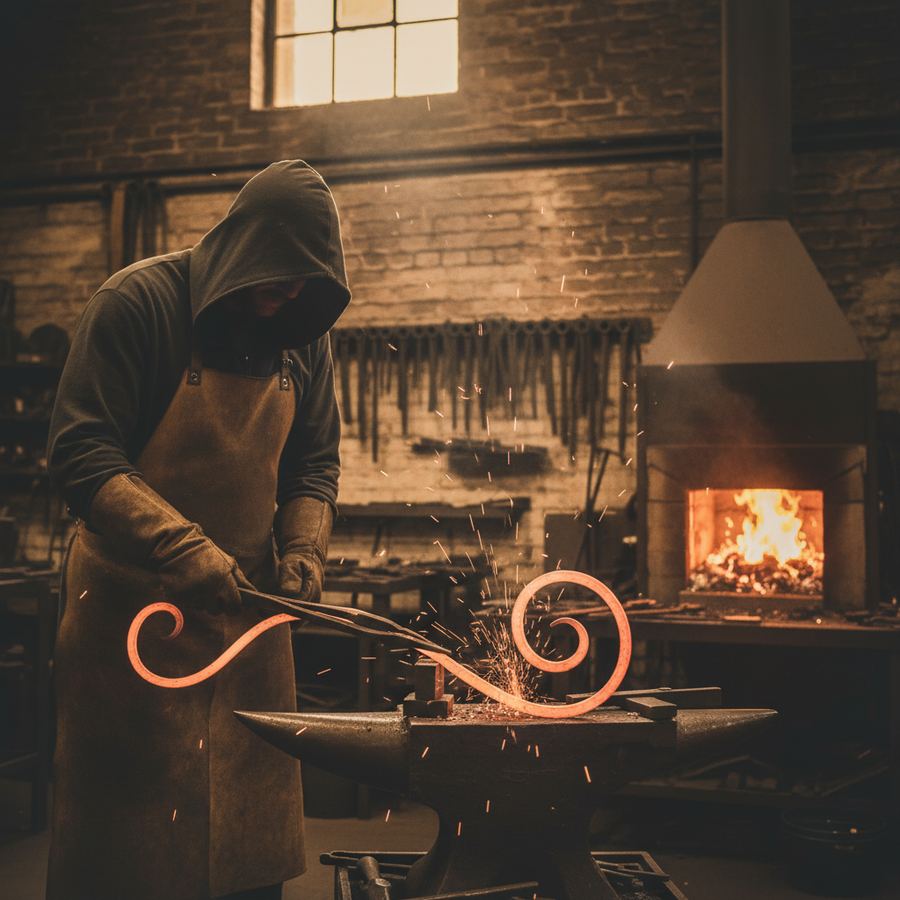
The term "art blacksmithing" gets used frequently in craft circles, but its meaning is not always clear. Is it simply blacksmithing that looks nice? Does it refer to sculptural work at the forge? Is an art blacksmith different from a regular blacksmith, and if so, how? These questions matter because they touch on larger issues about the relationship between craft, art, and function that the metalworking community has been wrestling with for decades.
At its simplest, art blacksmithing refers to the practice of forging metal with aesthetic intent as a primary goal. The art blacksmith uses the same tools and techniques as any other smith: forge, anvil, hammer, tongs. The steel is heated, shaped, and finished through the same fundamental operations of drawing, upsetting, bending, twisting, punching, and joinery. What distinguishes art blacksmithing is the purpose behind the work and the criteria by which it is judged. Where a production blacksmith prioritizes function, efficiency, and repeatability, the art blacksmith prioritizes form, expression, and originality.
A Brief History
For most of blacksmithing's long history, the distinction between art and craft was not a meaningful one. A village smith made what the community needed: nails, hinges, tools, horseshoes, and hardware. Some smiths had better aesthetic instincts than others, and their work was more attractive as a result, but the primary purpose was always functional. The decorative ironwork of the European tradition, the elaborate gates, grilles, and balconies of France, Spain, Germany, and England, represented the high end of the craft but was still fundamentally architectural and functional in nature.
The idea of the blacksmith as artist, rather than artisan, began to take hold in the mid-twentieth century. The American studio craft movement, which elevated pottery, weaving, glass, and woodworking alongside metalwork, created a context in which a blacksmith could pursue personal expression at the forge. Organizations like the Artist Blacksmiths' Association of North America, founded in 1973, gave the movement an institutional home. In Canada, the art blacksmithing community grew through provincial guilds, workshops, and the influence of European-trained smiths who brought continental ironworking traditions to Canadian soil.
Art, Craft, and the Space Between
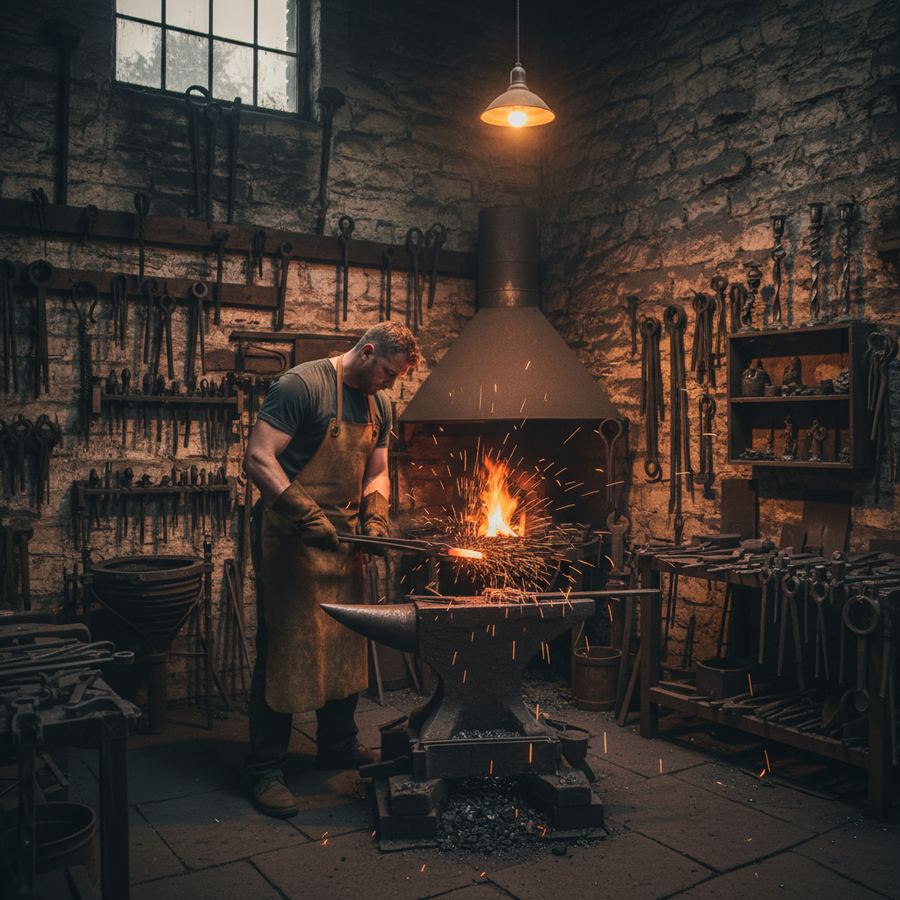
The relationship between art and craft in blacksmithing is not a clean binary. Most working blacksmiths move fluidly between functional and expressive work. A smith might spend Monday forging a set of cabinet hinges, a purely functional commission, and Tuesday working on a sculptural fireplace screen where form and surface treatment are as important as heat resistance and structural soundness. The skills are the same; the emphasis shifts.
This fluidity is one of art blacksmithing's strengths. Unlike some fine art practices that have become entirely detached from utility, forged metalwork maintains a connection to the functional world. Even the most expressive art blacksmithing retains the material intelligence and technical rigour that come from working with a demanding material under demanding conditions. A sculptor who also makes hinges understands structure, load, and wear in ways that inform the sculptural work, even when those concerns are not the primary focus.
What Makes It Art
If the tools and techniques are the same, what makes a piece of blacksmithing art rather than craft? The answer is necessarily subjective, but several qualities tend to characterize work that is recognized as art blacksmithing.
First, intentionality. The art blacksmith makes deliberate choices about form, proportion, surface, and composition that go beyond what function requires. A railing that simply keeps people from falling needs uprights and a handrail. An art railing uses those structural necessities as starting points for visual exploration, introducing curves, textures, rhythmic spacing, and focal elements that transform a safety barrier into a visual experience.
Second, originality. Art blacksmithing moves beyond pattern and repetition toward unique expression. This does not mean that every piece must be radically new. It means that the maker engages creatively with the design rather than simply reproducing a template. Even traditional forms like scrollwork and leaf designs can be art when the smith brings a personal vision to their execution.
Third, material sensitivity. The best art blacksmithing shows a deep understanding of and respect for the qualities of forged steel. The hammer texture is not a defect to be ground away but a record of the making process. The taper of a drawn point, the swell of an upset shoulder, and the warmth of a hand-rubbed finish all contribute to the object's character. Art blacksmithing embraces these qualities rather than trying to make forged metal look like it was cast or machined.
Art Blacksmithing in Canada Today
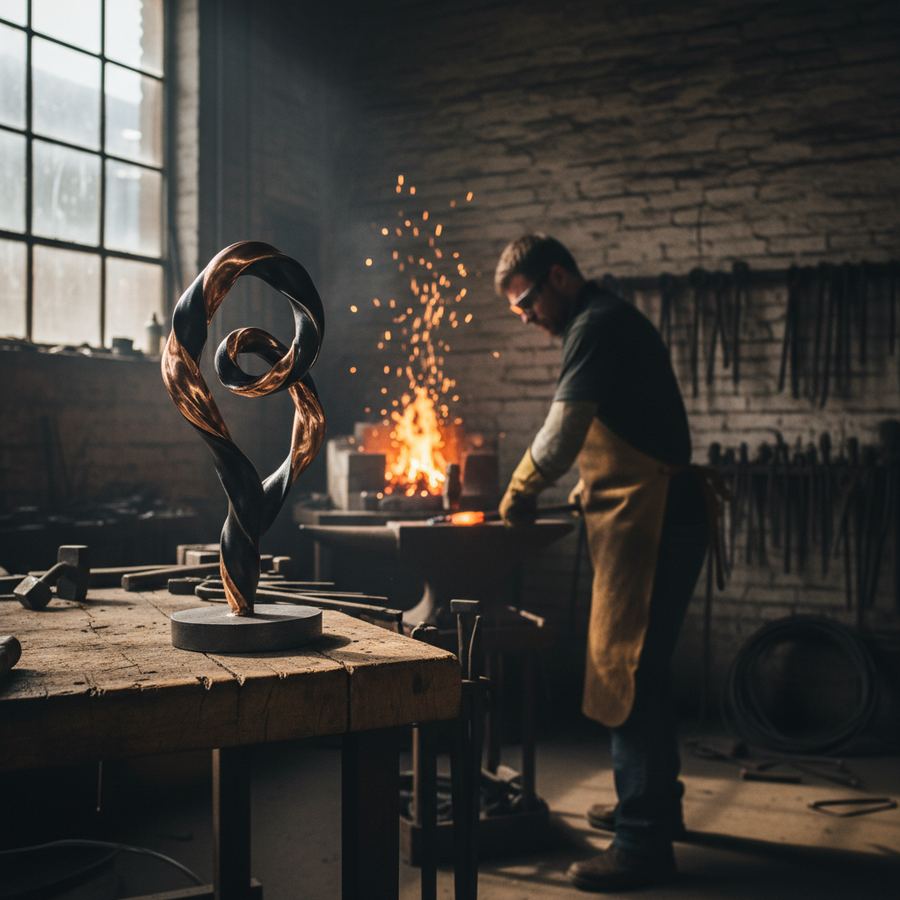
The Canadian art blacksmithing scene is small but vibrant. Contemporary practitioners work across the full spectrum of the discipline, from architectural commissions that push the boundaries of decorative ironwork to freestanding sculpture that inhabits gallery spaces. Several Canadian smiths have earned international recognition through competition, exhibition, and teaching. The country's annual conferences and regional hammer-ins provide opportunities for demonstration, critique, and the exchange of ideas that keep the community intellectually alive.
One notable development is the growing number of women entering art blacksmithing, bringing perspectives and sensibilities that are broadening the aesthetic range of the field. Another is the influence of digital tools. While the forging itself remains resolutely analogue, some art blacksmiths now use CAD software, 3D printing for maquettes, and CNC plasma cutting for elements that are then forged and assembled. These tools expand what is possible without replacing the essential hand-and-fire process at the heart of the craft.
Why It Matters
Art blacksmithing matters because it keeps alive a form of making that engages the whole person: body, mind, and creative spirit. In a world increasingly dominated by digital processes and mass production, the act of shaping hot steel with a hammer is almost defiantly physical. The objects produced carry that physicality in their surfaces, their weight, and their presence in a room. They remind us that human hands are still capable of remarkable things.
For anyone curious about exploring art blacksmithing, the path begins at the workshop. A weekend at the forge is enough to discover whether the craft speaks to you. If it does, the rabbit hole goes deep, a lifetime of learning, making, and growing at the anvil. The fire is always ready for one more heat.