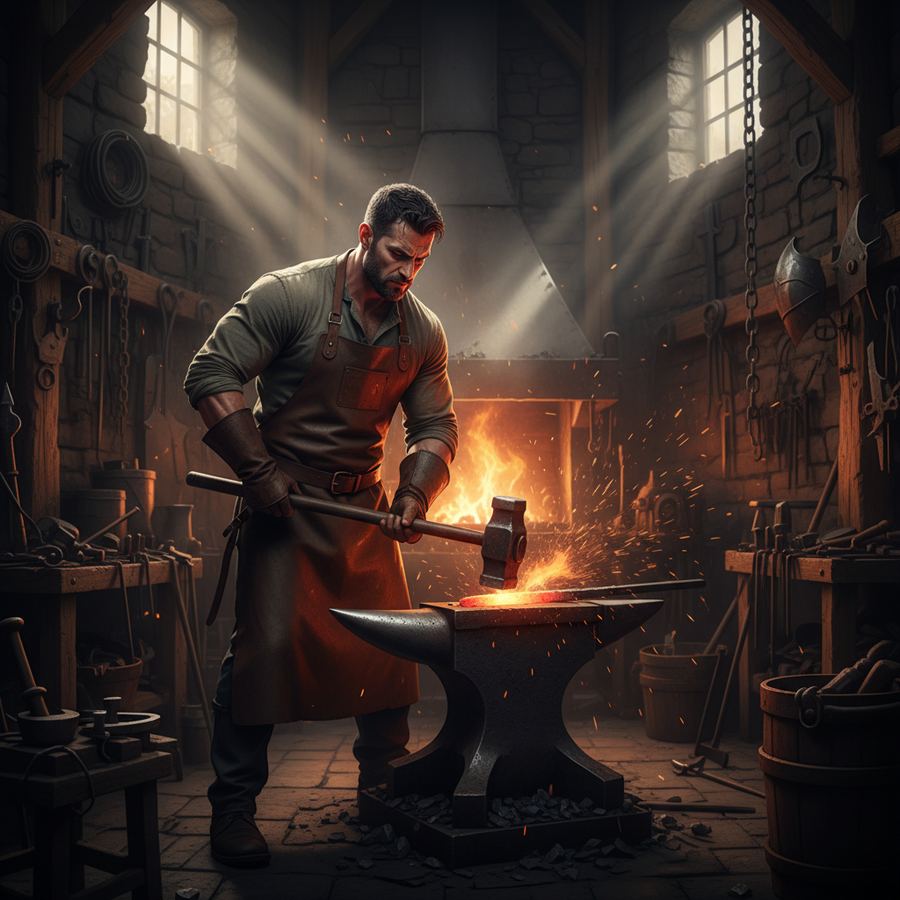
Traditional forging and contemporary ironwork across Canada
The Living Forge
Blacksmithing in Canada carries a lineage that stretches back to the earliest colonial settlements, where smiths were among the most essential tradespeople in any community. Every fort, farm, and fishing village depended on someone who could draw iron into nails, hinges, tools, and hardware. That functional tradition never disappeared. It simply evolved. Today, Canadian blacksmiths work in urban studios and rural shops alike, producing everything from architectural railings and garden gates to sculptural furniture and fine kitchen knives. The forge remains the centrepiece of the practice: a coal, gas, or induction heat source that brings steel to working temperature so the smith can move metal under the hammer.
What distinguishes blacksmithing from other metal arts is the directness of the process. A blacksmith heats a bar of steel, places it on an anvil, and shapes it through a combination of drawing, upsetting, bending, punching, and twisting. There is no filler material, no melting and casting, and very little waste. The smith reads colour to judge temperature, listens to the ring of the anvil to gauge progress, and develops an intuitive understanding of how metal flows under force. It is a discipline that rewards patience and repetition, but it also leaves room for expressive, one-of-a-kind work that no machine can replicate.
Across Canada, the blacksmithing community is remarkably active. Provincial guilds in Ontario, Alberta, British Columbia, and Quebec host regular hammer-ins, demonstrations, and group forging sessions where beginners and seasoned smiths work side by side. National events bring makers together from across the country to share techniques, display finished work, and discuss the future of the craft. University and college programs in fine arts and industrial design have started to include forging modules, recognizing that hands-on metalwork develops spatial reasoning and material literacy that no screen-based tool can provide.
The range of work produced by Canadian blacksmiths is wide. Some focus on architectural commissions: railings, balconies, fireplace screens, door hardware, and ornamental gates for heritage buildings and private residences. Others specialize in toolmaking, forging hammers, tongs, and hardy tools for fellow smiths. A growing number pursue blade smithing, crafting kitchen knives, hunting knives, and swords using traditional lamination and pattern-welding techniques that produce the distinctive layered patterns known as Damascus steel. Still others work at a purely sculptural scale, creating public art installations, gallery pieces, and functional art furniture that blurs the line between craft and fine art.
If you are new to blacksmithing, the best way to begin is by taking a hands-on workshop. Several of our listed workshops offer weekend introductions where you will light a forge, learn basic hammer control, and take home a finished project. From there, the path is yours. Many Canadian smiths started with a single weekend class and went on to build full-time practices. Others keep forging as a deeply satisfying side pursuit that balances desk-bound work with physical making. Either way, the community is welcoming, the resources are abundant, and the steel is always ready to move.
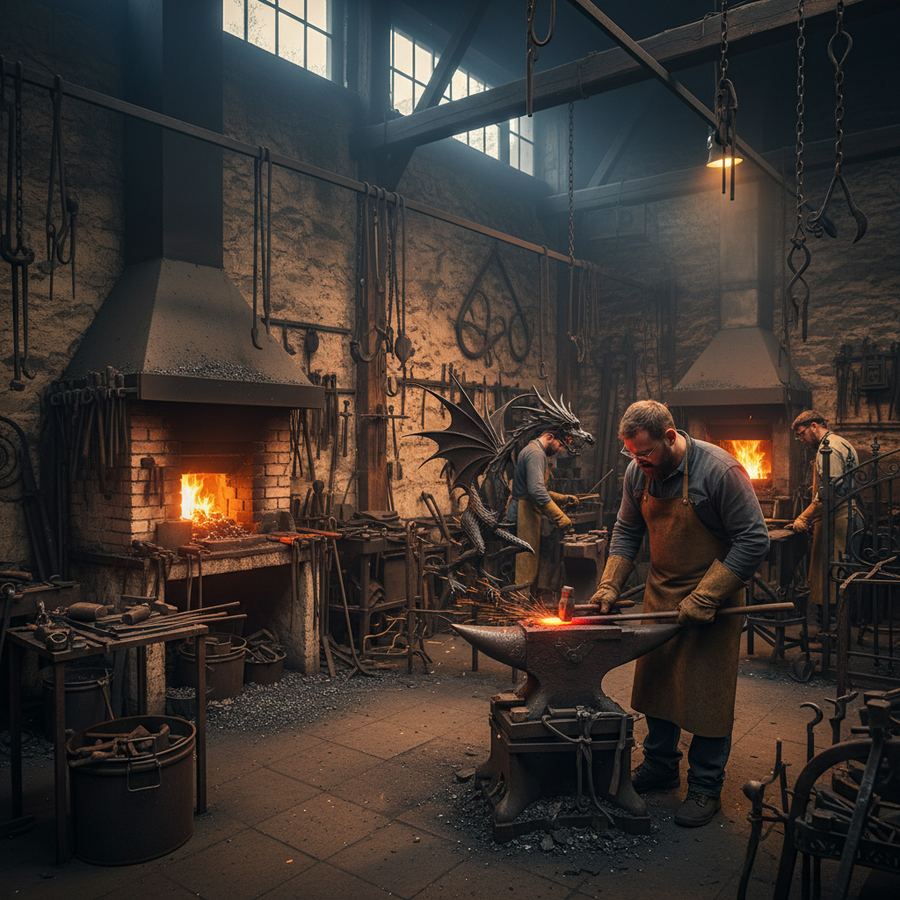
Forge and Flame, Ontario
A husband-and-wife team producing architectural ironwork and sculptural furniture from their rural Ontario workshop. Their work balances heritage technique with bold contemporary design.
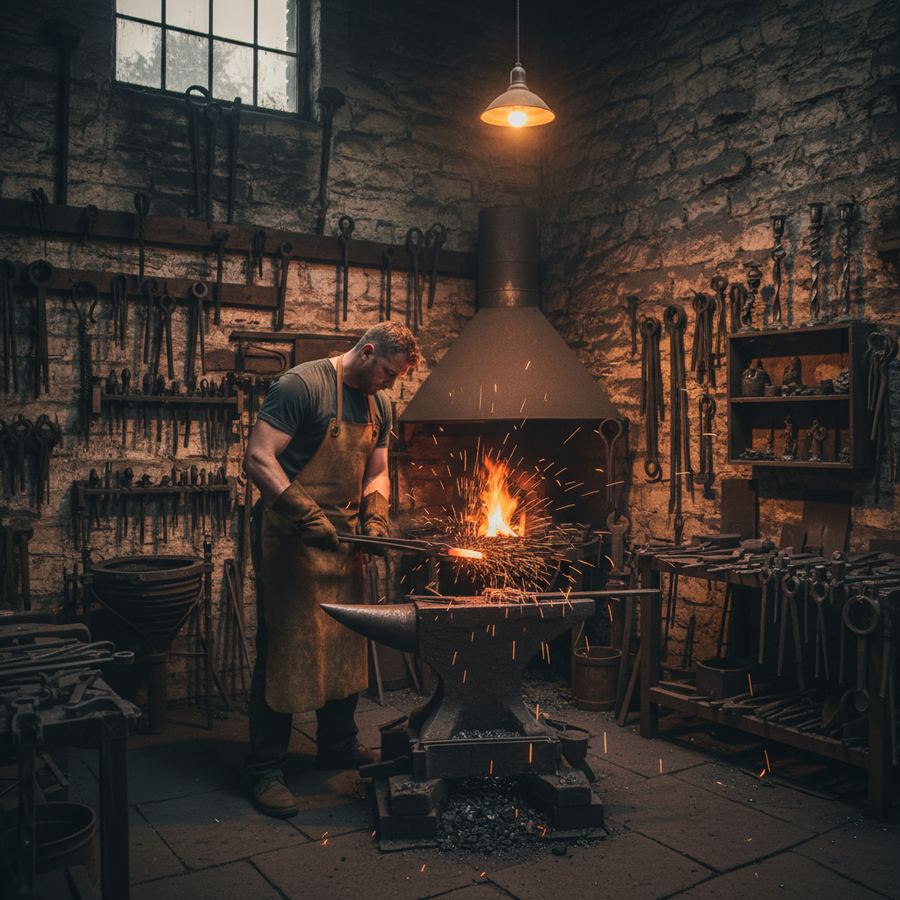
Intro to Blacksmithing Weekend
Our most popular workshop format puts hammer and tongs in your hands from the first hour. No experience required. You will leave with a finished forged piece and a solid foundation in basic technique.
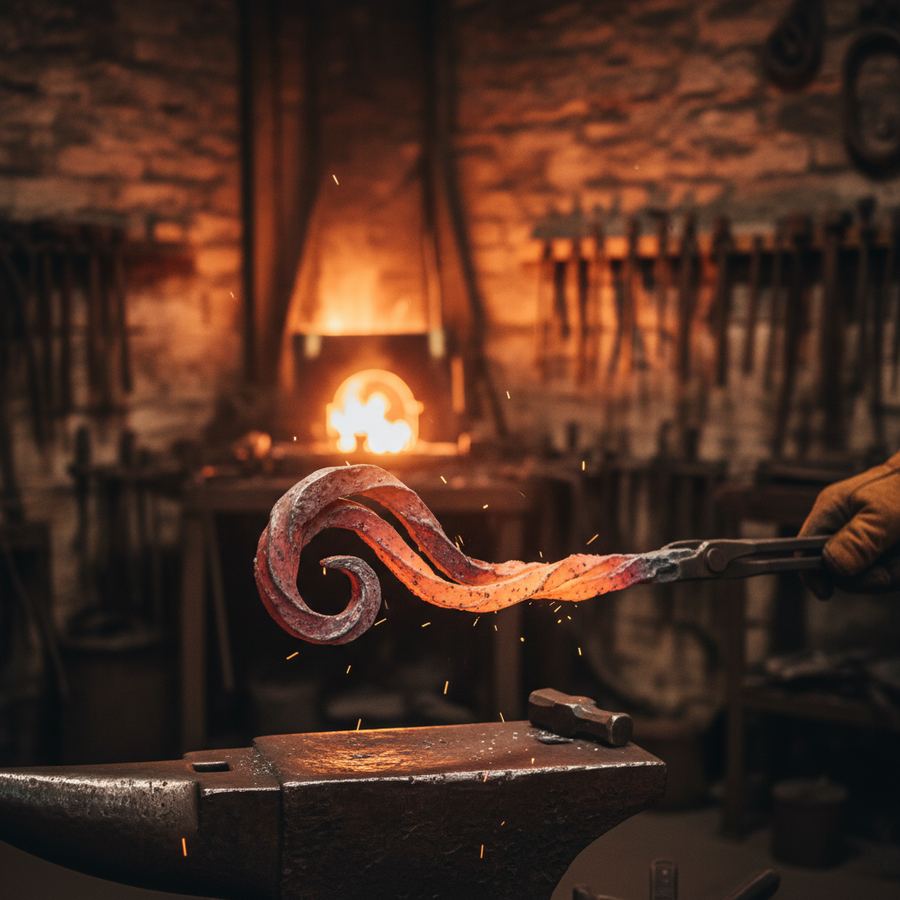
Contemporary Blacksmithing in Canada
A journal feature exploring the state of the craft nationwide, from production shops to artist-blacksmiths pushing creative boundaries at the anvil.