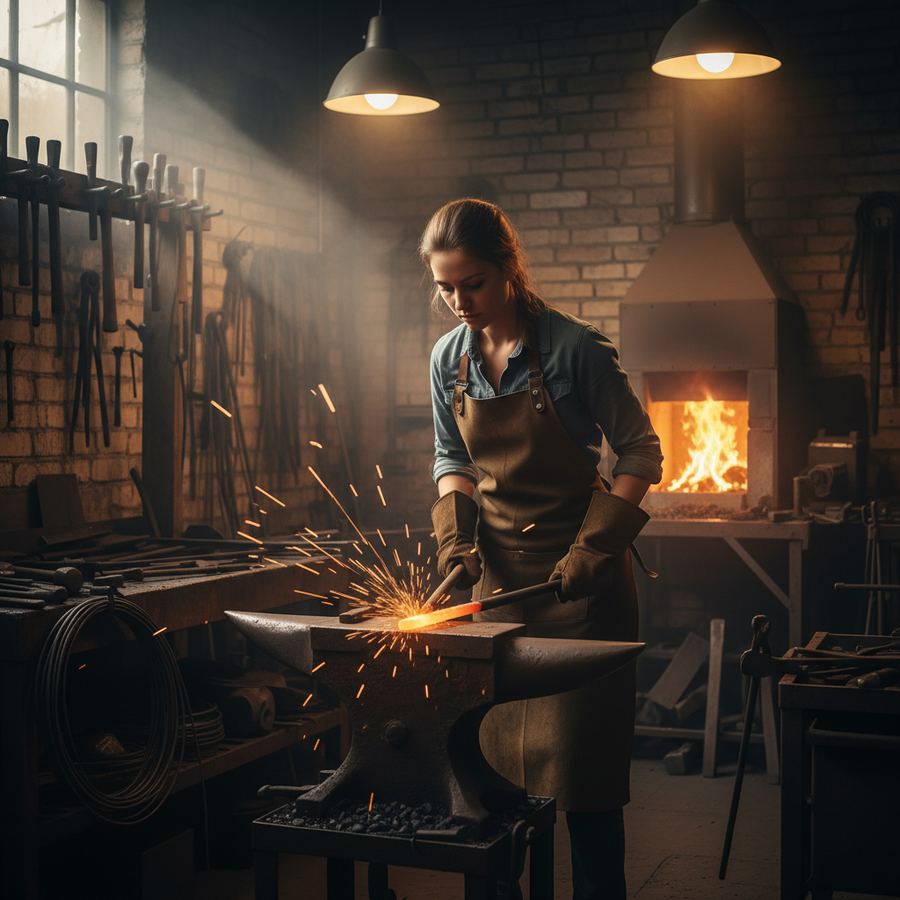
Two days at the forge, from first heat to finished project
Your First Hammer Blows
The Intro to Blacksmithing Weekend is the most popular workshop format offered through the Metal Arts Guild of Canada network. Held at partner studios and teaching forges across the country, this two-day intensive puts tools in your hands from the very first hour and builds your skills progressively through a series of guided projects. No prior experience with metalwork is required. By Sunday afternoon, you will have forged several completed objects, developed a working understanding of basic techniques, and gained the confidence to decide whether blacksmithing is a craft you want to pursue further.
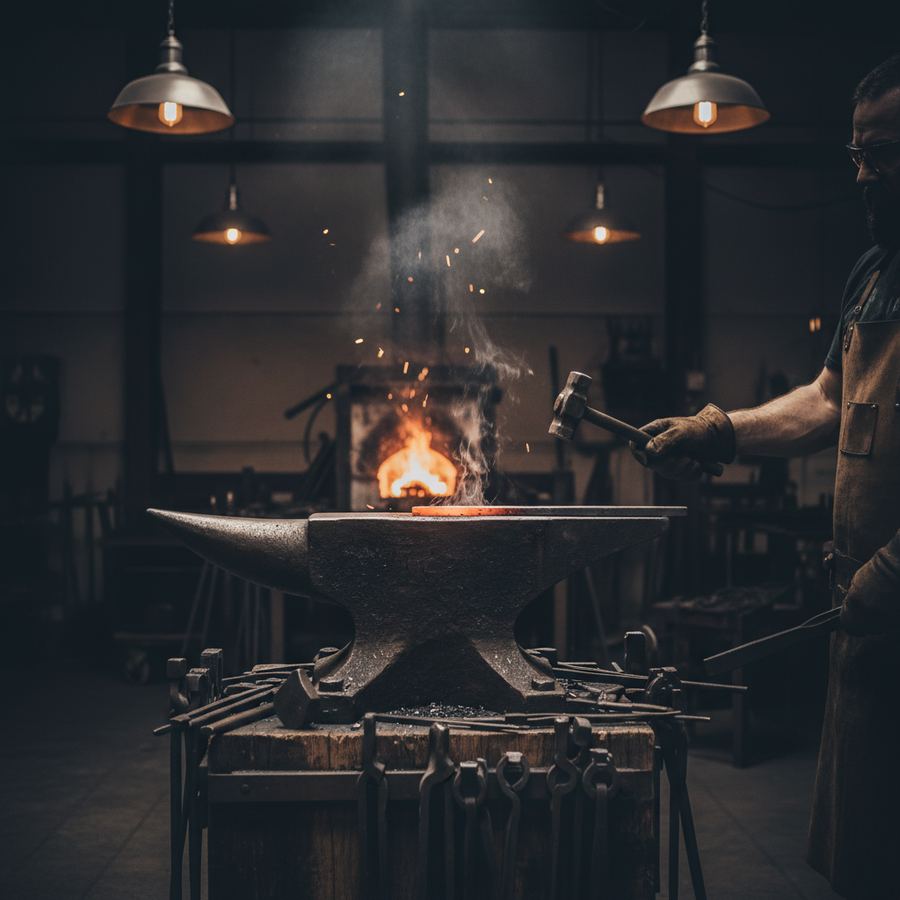
The workshop begins Saturday morning with an orientation to the forge environment. Your instructor walks the group through the layout of the shop, identifies the tools at each station, and covers essential safety protocols. You will learn how to light and manage a coal or gas forge, how to read the colour of heated steel to judge working temperature, and how to position yourself at the anvil for effective and safe hammer work. These fundamentals are not rushed. Getting them right at the start prevents bad habits and gives you a solid platform for everything that follows.
Saturday: Drawing, Tapering, and Bending
The first project is a simple S-hook forged from a length of round mild steel bar. This humble object is the traditional starting point for blacksmithing instruction because it requires you to practise three core operations: drawing out a taper, scrolling a curve, and reversing direction. You heat the steel in the forge until it reaches a bright orange, transfer it to the anvil, and begin drawing the end to a point using controlled hammer blows. The instructor demonstrates each step, then circulates as participants work at their own stations. The rhythm of the forge develops naturally: heat, hammer, inspect, reheat, hammer again. By the end of the first session, most participants have completed at least two hooks and are beginning to feel the relationship between force, angle, and metal movement.
Saturday afternoon introduces bending and twisting. Using slightly heavier bar stock, you forge a set of barbecue skewers with twisted handles and turned loops. This project builds on the morning's tapering skills and adds two new operations. Bending requires you to control where along the bar the bend occurs, using the anvil horn, a bending fork, or the edge of the anvil face. Twisting involves gripping the hot bar in a vise and rotating it with a wrench or tongs while the metal is at working temperature. Both operations demand attention to heat management. If the steel cools too much, it resists movement and risks cracking. If it overheats, the grain structure degrades. Learning to work within the correct temperature window is one of the most important lessons of the weekend.
Sunday: Punching, Riveting, and a Final Project
Sunday morning introduces punching and drifting. You learn to create holes in hot steel without drilling, using a punch driven through the material at forging temperature and then opened to final size with a drift tool. This technique is essential for traditional joinery, where components are connected with rivets or tenons rather than welds. You practise on flat bar, punching a series of clean holes and then using rivets to join two pieces together. The result is a simple bottle opener or keychain fob that demonstrates a joining method older than welding by several thousand years.
The final Sunday afternoon session is an open project period. Your instructor offers several options ranging from a wall hook with a decorative leaf terminal to a small candle holder with a forged base. You choose the project that interests you most and work through it with guidance as needed. This session is where the skills from the previous day and a half come together. You plan your sequence of operations, manage your heats efficiently, and solve problems as they arise. The finished piece is yours to take home, and it serves as tangible proof of what you accomplished in a single weekend.
What to Expect
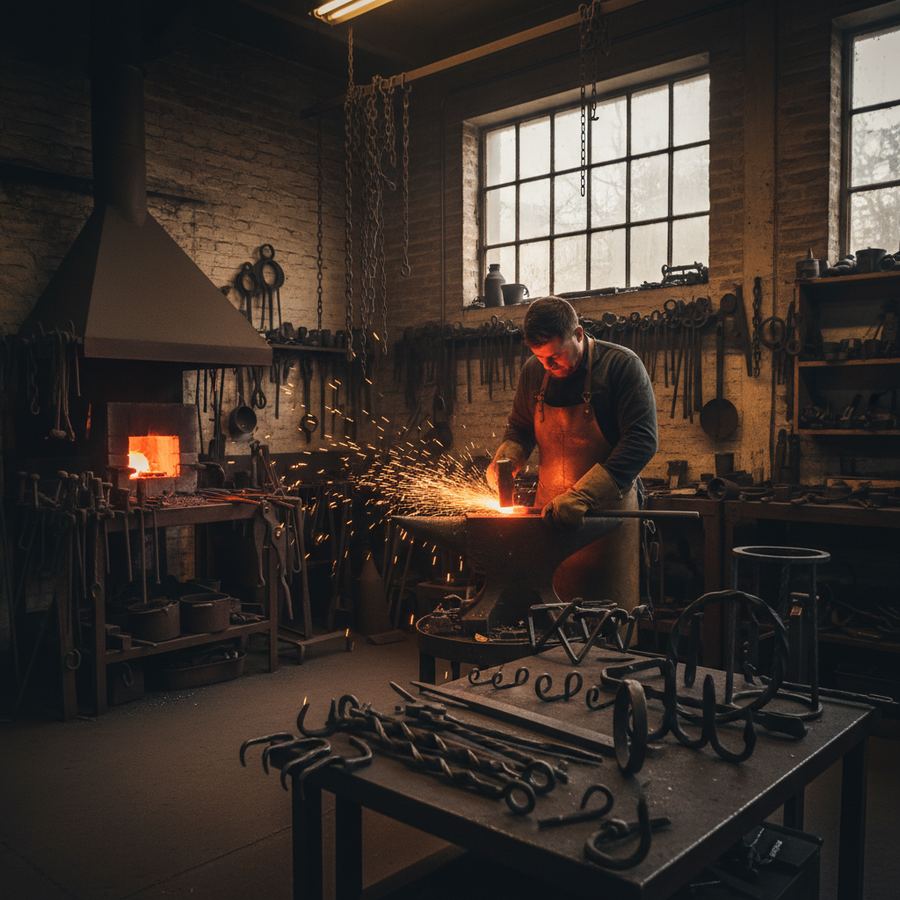
Class sizes are kept small, typically six to eight participants per instructor, to ensure that everyone receives individual attention. All tools, materials, and safety equipment are provided. You should wear closed-toe leather boots or sturdy shoes, long pants made of natural fibre such as cotton or denim, and a long-sleeved shirt. Synthetic fabrics melt when exposed to sparks and should be avoided. Most host studios provide safety glasses and hearing protection, but you are welcome to bring your own if you prefer a specific fit.
The physical demands of blacksmithing are real but manageable for most people. You will be standing for extended periods, lifting a hammer repeatedly, and working near heat sources. Instructors build in regular breaks and encourage participants to pace themselves. The weekend is designed to be challenging without being exhausting. If you have specific physical concerns, contact the host studio in advance and they will work with you to ensure a comfortable experience.
Finding a Session
Intro to Blacksmithing Weekend workshops are offered through guild-affiliated studios in Ontario, Alberta, British Columbia, Quebec, Nova Scotia, and Saskatchewan. Sessions run year-round, with peak availability from April through October when outdoor and open-air forges are most comfortable. Pricing varies by location but typically falls between two hundred and four hundred dollars for the full weekend, including all materials. Some studios offer bursaries or reduced rates for students and young people under twenty-five.
To find a session near you, browse our workshops directory and filter by region. If you are in Ontario, several studios in the greater Toronto area and eastern Ontario offer monthly sessions. Western Canada options are listed on our western Canada regional page. Atlantic provinces are covered on the Atlantic Canada page. You can also explore our blacksmithing overview for broader context on the craft, or visit the Artist-Blacksmith's Association of North America for additional resources and continental event listings.
The Intro to Blacksmithing Weekend is where hundreds of Canadian smiths started their journey. Some went on to build full-time forging practices. Others found a lifelong weekend pursuit that balances office work with physical making. A few discovered that their real interest lay in a related discipline and moved on to welding art or jewellery metalsmithing. Whatever direction you take, the weekend gives you a foundation of hands-on knowledge that no book or video can replicate. The steel is waiting.