Darren Caldwell | Ontario | Blacksmithing
About the Practice
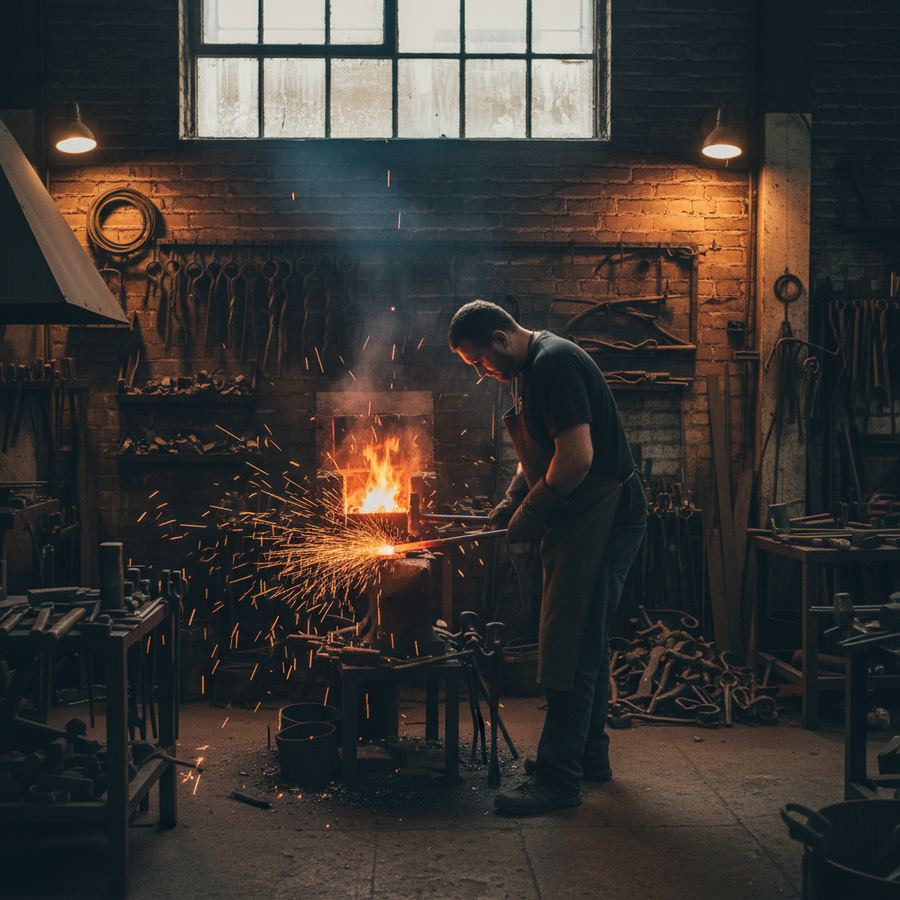
Forge and Flame Studio operates out of a converted dairy barn on the outskirts of Elora, Ontario, where blacksmith Darren Caldwell has been working iron and steel for over twenty years. The studio sits on a gravel road lined with old maples, and the sound of hammer on anvil carries across the surrounding farmland on most mornings. What began as a hobby during university evolved into a full-time craft after Darren apprenticed under a German-trained smith in the Niagara region during the early 2000s. That formative experience shaped an approach to metalwork grounded in European tradition but adapted to the materials, climate, and architectural context of rural and small-town Ontario.
The studio produces a range of work spanning architectural ironwork, forged furniture, and heritage restoration. Darren works primarily with mild steel and wrought iron, though he regularly incorporates copper, bronze, and brass accents into commissions that call for warmth and visual contrast. His coal forge, a side-blast design he built himself, remains the centre of the shop, flanked by two gas forges used for larger production runs. A 100-pound Little Giant power hammer handles the heavy drawing and fullering work, while most finishing is done by hand at the anvil. The shop is not large, but every tool in it has a purpose and a place.
Architectural and Residential Work
A significant portion of the studio's output is architectural. Darren has forged railings, gates, fireplace screens, pot racks, and door hardware for homes across southern Ontario, with concentrations in the Perth County and Wellington County areas. His residential commissions tend toward clean lines that reference traditional joinery without imitating historical styles wholesale. Collars, tenons, and riveted connections appear frequently in his vocabulary, and he avoids MIG-welded joints wherever a forged connection is possible. This commitment to joinery is not merely aesthetic. Forged connections flex and absorb stress differently than welded ones, and in exterior applications subject to freeze-thaw cycles, that flexibility translates directly to longevity.
One of his most recognized residential projects is a pair of entry gates for a stone farmhouse near Fergus. The gates feature tapered pickets with forged spear points, scrolled brackets, and a central medallion forged from a single bar of half-inch square stock. The project took three months from design to installation and required close coordination with the mason who rebuilt the stone pillars flanking the driveway. Darren has noted in interviews that this kind of collaboration with other trades is one of the most rewarding parts of his work, and he actively seeks out projects where metal, stone, and wood come together.
Forged Furniture and Functional Objects
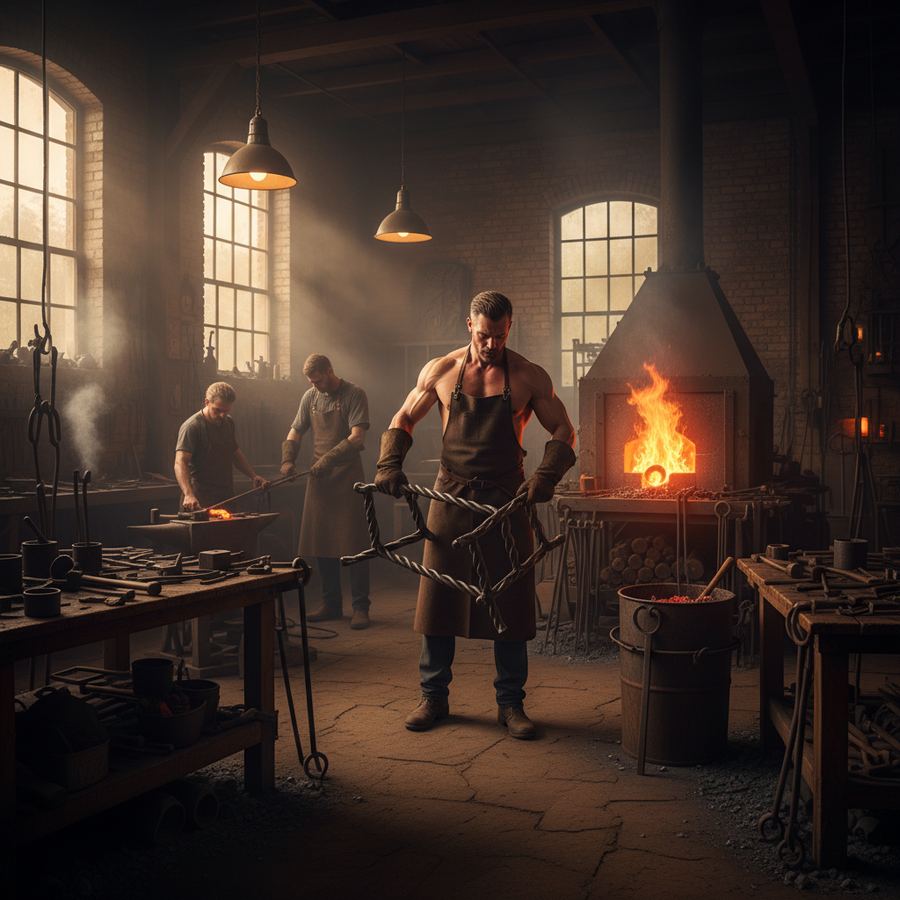
Beyond architectural commissions, Forge and Flame produces a line of forged furniture and household objects. Tables with forged steel bases and reclaimed wood tops have become a signature offering, as have candle holders, fire tools, and coat hooks. These items are sold through the studio directly, at craft shows in Elora and Guelph, and through a small number of independent shops in the region. Darren keeps his production runs modest, preferring to maintain the hand-forged quality that distinguishes his work from factory-produced alternatives.
His furniture pieces are notable for their proportions. Darren trained as a cabinetmaker briefly before committing to metalwork, and that background informs the way he thinks about the relationship between a base and a top, or between the legs of a table and the floor it stands on. He frequently makes full-scale cardboard mockups before cutting any steel, a practice he picked up during his apprenticeship and has never abandoned. The result is work that feels considered and balanced, even when the forging itself is deliberately rough and expressive.
Heritage Restoration
Forge and Flame has also developed a specialization in heritage ironwork restoration. Several municipal heritage committees in Ontario have engaged Darren to assess and repair ironwork on designated heritage properties, including fences, balconies, and window grilles dating from the mid-nineteenth century. This work requires careful metallurgical analysis to determine the composition of original material, as well as the ability to replicate historical techniques such as slit-and-drift joinery, hand-cut scrolls, and forge-welded assemblies. Darren maintains a reference library of pattern books and historical hardware catalogues that he consults regularly when planning restoration work.
The restoration side of the practice has deepened Darren's understanding of how ironwork ages and performs over decades and centuries. He has observed firsthand the difference between wrought iron and mild steel in exposed exterior applications, and this knowledge informs the material choices and finishing strategies he recommends to clients. For exterior work, he typically applies a combination of beeswax and linseed oil over a wire-brushed surface, a traditional finish that requires periodic maintenance but avoids the peeling and bubbling common with paint systems applied over forge scale.
Teaching and Community
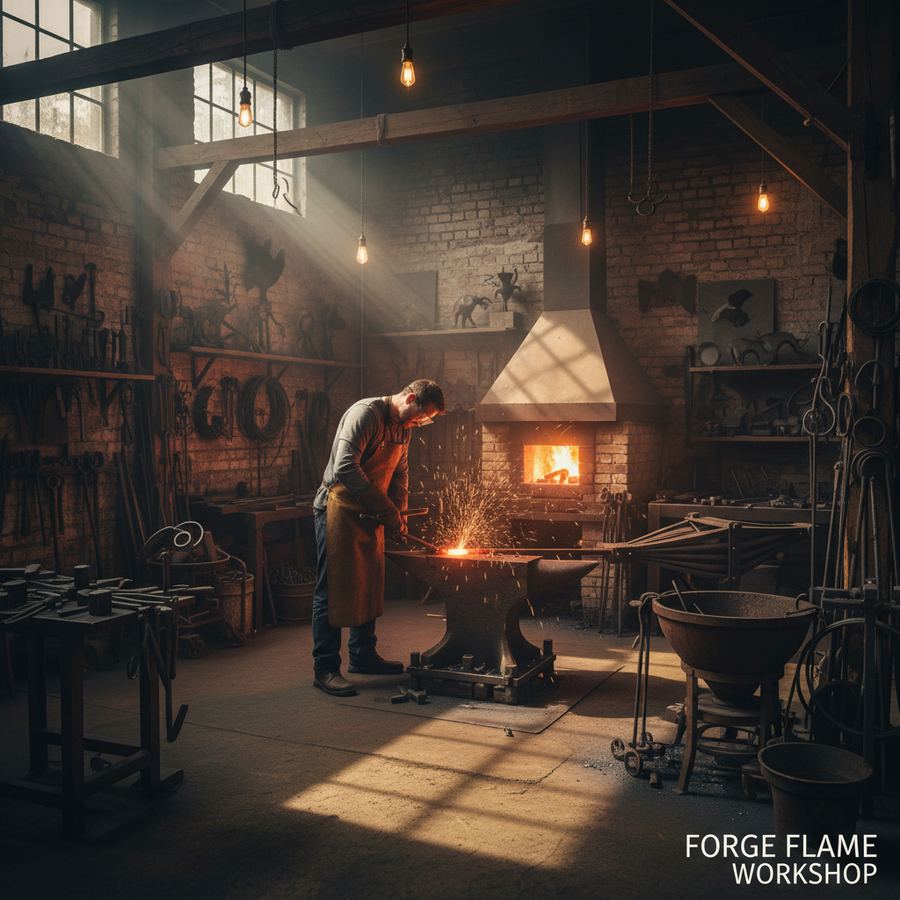
Darren is an active member of the Ontario Artist Blacksmith Association and has demonstrated at several regional conferences. He also hosts small-group workshops at his Elora studio during the summer months, typically offering introductory courses aimed at beginners who want to experience forging for the first time. These workshops are limited to four participants and run over a single day, covering basic fire management, drawing out a taper, and forging a simple hook or bottle opener. Darren views teaching as an extension of his own learning process and credits his students with pushing him to articulate techniques he might otherwise perform on instinct alone.
His connection to the broader Canadian blacksmithing community runs deep. He has collaborated on public art installations with other guild members and regularly lends tools and expertise to emerging smiths setting up their first shops. He sees the current growth of interest in hand-forged work as both an opportunity and a responsibility. The opportunity lies in a public increasingly willing to invest in handmade quality over mass-produced convenience. The responsibility is to maintain the standards of craftsmanship that justify that investment.
Materials and Process
At the centre of Darren's process is a commitment to working hot steel. He prefers to move material at welding heat whenever possible, believing that the surface texture produced by high-heat forging carries an energy and directness that cold work cannot replicate. His hammer technique is economical and precise, the product of thousands of hours at the anvil. Watching him draw a taper or set a shoulder, one notices the absence of wasted motion. Each blow lands where he intends it, and the metal responds accordingly.
He sources most of his steel from service centres in Hamilton and Kitchener, with occasional lots of reclaimed wrought iron salvaged from demolition sites. The reclaimed material, when he can get it, is reserved for projects where its fibrous grain and historical character add genuine value. He is careful to distinguish between wrought iron and mild steel in his descriptions to clients, and he pushes back against the common misuse of the term "wrought iron" to describe any forged metalwork regardless of material composition.
Forge and Flame Studio remains a one-person shop by choice. Darren has considered taking on an apprentice but has not yet found the right candidate. He is looking for someone with patience, physical stamina, and genuine curiosity about the material, qualities he values more than prior experience. Until that person appears, the studio continues as it has for two decades: one smith, one forge, and the steady rhythm of hammer and anvil in a barn beside the road.