Hana Olsen | Alberta | Metal Sculpture
About the Practice
Iron Ridge Studio sits on twenty acres of rolling foothill country west of Cochrane, Alberta, where sculptor Hana Olsen creates large-scale metal works that respond to the landscape surrounding them. The studio compound includes a 2,400-square-foot fabrication shop, an outdoor welding area, and several acres of open ground where finished sculptures stand among native grasses and wildflowers. Hana moved to Alberta from Vancouver in 2009, drawn by the affordability of rural land and the dramatic topography of the eastern slopes. She has been working in metal full-time since 2006, after completing a BFA in sculpture at Emily Carr University and spending two years welding in commercial shipyards on the coast.
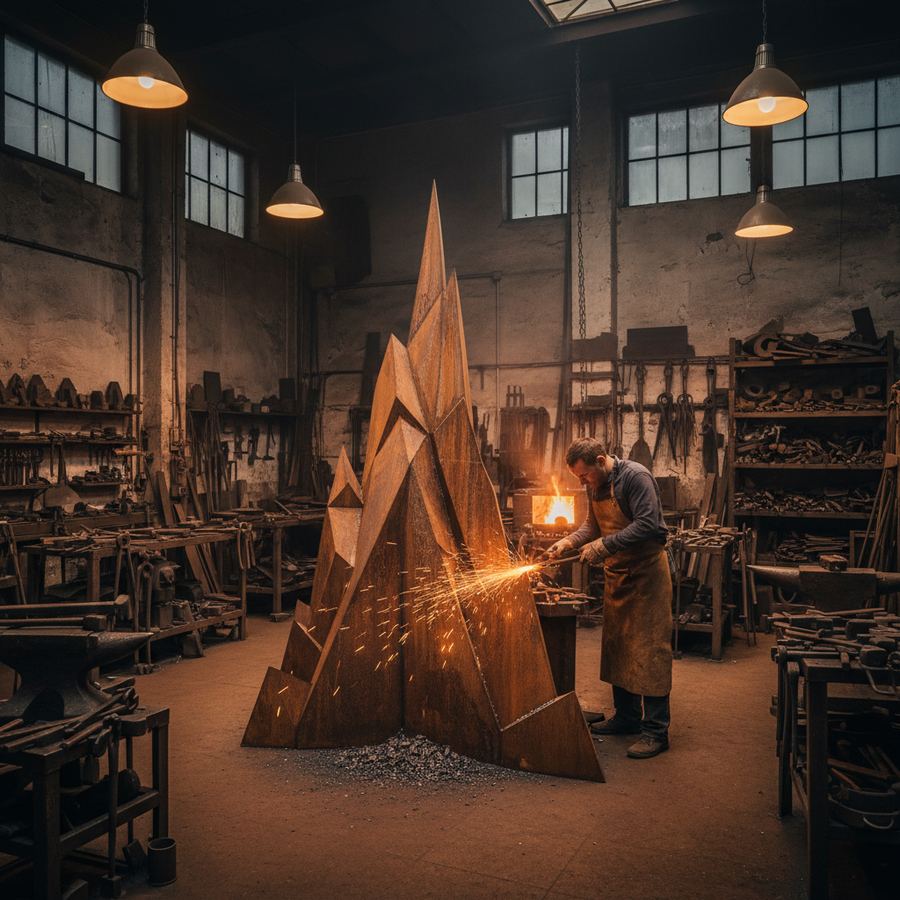
Her primary material is weathering steel, commonly known by the trade name Corten, which develops a stable rust patina when exposed to the elements. This material choice is inseparable from the work's intent. Hana's sculptures are designed for permanent outdoor installation, and the slow transformation of their surfaces over months and years is integral to their meaning. A newly installed piece gleams with the orange brightness of fresh oxidation. Over the first year, the patina deepens to chocolate brown. By the third or fourth year, the surface settles into a rich, dark umber that shifts in tone with the light and weather. This process of change connects the work to the land in ways that painted or polished finishes cannot.
Sculptural Language
Hana's formal vocabulary draws on the geological and biological forms of the Alberta foothills. Her work does not depict landscape literally but abstracts its rhythms into sweeping curves, angular folds, and stacked horizontal planes that echo the sedimentary layers visible in nearby road cuts and riverbanks. A typical piece might stand eight to twelve feet tall and consist of heavy plate steel cut into organic shapes, then bent and welded into structures that appear both massive and precarious. The tension between weight and apparent lightness is a recurring theme. Several of her best-known works feature cantilevered elements that seem to defy gravity, balanced through careful engineering hidden within the sculpture's internal framework.
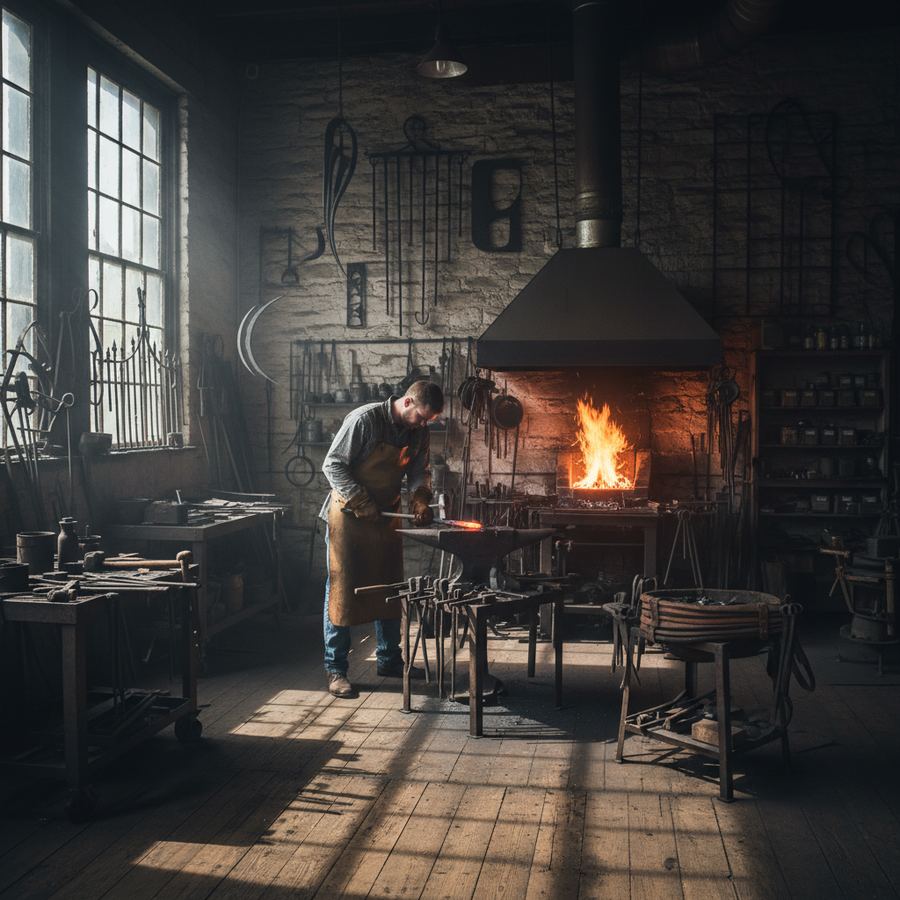
She works at a scale that demands industrial equipment. The shop houses a plasma cutting table capable of handling four-by-eight-foot sheets, a 20-ton hydraulic press brake for forming curves and angles, and a combination of MIG and stick welders for assembly. Despite this equipment, significant portions of each sculpture are shaped by hand using oxy-acetylene torches, grinders, and hammers. Hana values the surface texture that hand work produces and deliberately preserves grind marks, weld spatter, and torch-cut edges as evidence of the making process. She has described this approach as "honest fabrication," a refusal to disguise the labour embedded in the material.
Public Commissions and Installations
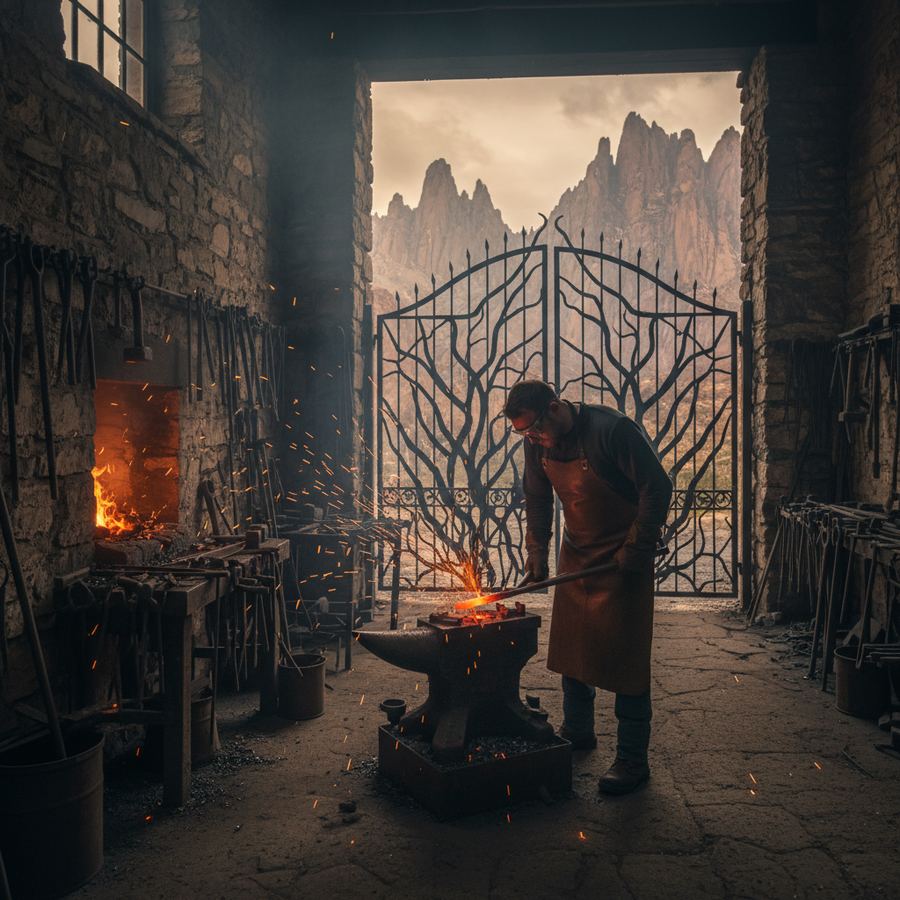
Iron Ridge Studio has completed public sculpture commissions across western Canada. Notable installations include a twelve-foot sentinel figure for the entrance plaza of a municipal library in Red Deer, a series of five abstracted bison forms for a heritage park in Lethbridge, and a kinetic wind sculpture for a corporate campus in Calgary's northeast industrial district. The library commission, completed in 2018, was Hana's first major public art project and remains one of her most visible. The sentinel is constructed from quarter-inch Corten plate and stands on a poured concrete base faced with local sandstone. Its form suggests a standing figure with outstretched arms, though the abstraction is sufficient that viewers have read it as everything from a tree to a bird in flight. Hana welcomes this ambiguity and considers it evidence that the work is doing its job.
The Lethbridge bison series presented different challenges. The five sculptures range from four to seven feet in height and are arranged along a walking trail in a configuration that evokes a herd moving across open ground. Each bison is constructed from thick plate steel cut and bent to suggest the massive shoulders, curved spine, and lowered head characteristic of the species. Hana spent weeks observing bison at Elk Island National Park before beginning fabrication, filling sketchbooks with gesture drawings that captured movement and posture rather than anatomical detail. The finished sculptures are powerful presences in the landscape, their dark patina blending with the prairie earth in autumn and standing starkly against the snow in winter.
Process and Engineering
Every large-scale sculpture begins as a series of small maquettes fabricated from scrap steel in the studio. Hana builds these study models quickly and intuitively, cutting and welding without drawings, letting the material suggest form. When a maquette captures the feeling she is after, she photographs it from multiple angles and begins the engineering process of scaling it up. This transition from intuitive model to engineered structure is where much of the intellectual work happens. A form that balances beautifully at eighteen inches may require significant internal reinforcement at twelve feet. Wind loading, frost heave, and soil conditions at the installation site all factor into structural decisions. Hana collaborates with a structural engineer in Calgary on her larger commissions, but she understands enough engineering to handle mid-scale projects independently.
Foundation design is a critical and often underappreciated aspect of outdoor sculpture installation. Hana has learned through experience that the connection between sculpture and ground determines the long-term success of the piece. She specifies concrete foundations with embedded steel plates and threaded studs for all her permanent installations, and she insists on being present during the pour and the final setting of the sculpture onto its base. This attention to the interface between artwork and earth reflects her broader philosophy that sculpture and site are inseparable.
The Sculpture Field
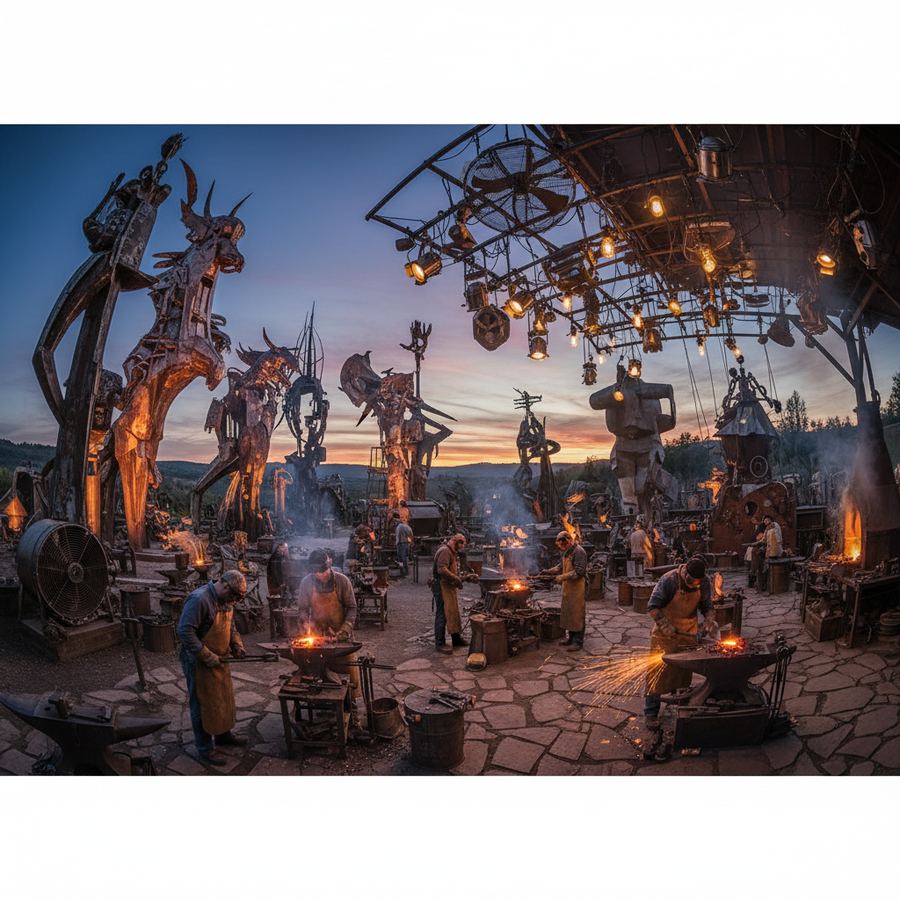
Behind the studio, Hana maintains what she calls the sculpture field, an open meadow where completed works, prototypes, and experiments stand in various states of patination. Walking through the field is like moving through a timeline of her practice. Early pieces from 2007 and 2008, compact and tentative in their forms, stand near recent works of considerably greater ambition and scale. The field also serves a practical function as a showroom. Collectors and curators who visit the studio can see work in a landscape setting rather than under fluorescent shop lights, and the effect is transformative. Sculptures that look like fabricated steel objects indoors become presences in the landscape outdoors, their forms resonating with the hills and sky behind them.
Hana's relationship with the broader metal arts community in Canada is one of active participation. She has exhibited in group shows at galleries in Calgary, Edmonton, and Vancouver, and her work has been featured in publications devoted to contemporary sculpture and public art. She serves as a mentor to younger sculptors working in metal, offering studio visits and practical advice on everything from equipment purchases to grant applications. The welding art discipline in Canada owes something to artists like Hana who have demonstrated that industrial fabrication skills and fine art ambitions are not only compatible but mutually enriching.
Looking Forward
Current projects at Iron Ridge Studio include a commission for a waterfront park in Kelowna and a self-directed series exploring the forms of glacial erratics, the massive boulders deposited by retreating ice sheets that dot the Alberta landscape. The erratic series marks a shift toward even greater abstraction in Hana's work, with forms that are simpler and more monolithic than her earlier compositions. She describes these new pieces as "slow sculptures" designed to reward extended looking rather than immediate comprehension. It is a direction that suits both the material and the landscape, and it suggests that Iron Ridge Studio's most compelling work may still lie ahead.