Metal Arts Guild | October 31, 2025
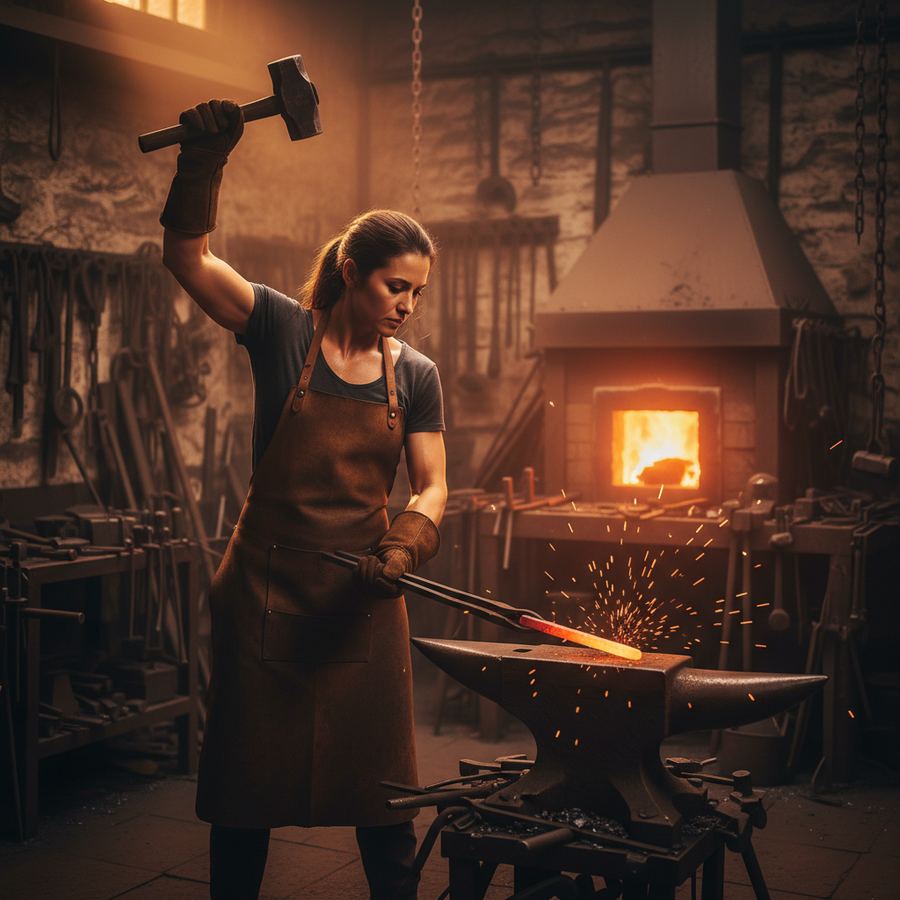
Blacksmithing has long been coded as a male pursuit. The image of the blacksmith in popular culture is almost always a large man with heavy arms, swinging a hammer in a dim, soot-stained shop. That image was never the whole story, and today it is less accurate than ever. Across Canada, women are stepping up to the anvil in growing numbers, bringing fresh perspectives to a craft that benefits enormously from their presence.
The history of women in metalwork is older and richer than most people realize. In many cultures, women have traditionally worked with metals, particularly in jewellery making, tinsmithing, and decorative work. Even in European blacksmithing, where the craft was overwhelmingly male, there are records of widows continuing their husband's smithing businesses and of women working as strikers and assistants in family forges. What is new is not women working with metal but women being recognized and welcomed as blacksmiths in their own right.
The Current Landscape
Reliable numbers are hard to come by, but anyone who attends blacksmithing workshops and conferences in Canada will notice the shift. Where women once made up a small fraction of participants, they now commonly represent a quarter to a third of attendees at introductory courses, and the proportion is growing. At the professional level, a number of Canadian women now operate their own forging businesses, teach workshops, and exhibit in juried shows alongside their male peers.
The work these women produce spans the full range of blacksmithing practice. Some focus on architectural ironwork, forging railings, gates, and hardware for residential and commercial projects. Others specialize in toolmaking, cutlery, or sculptural work. Several have become sought-after instructors, valued not only for their technical skill but for their ability to create welcoming, inclusive learning environments that encourage other women and underrepresented groups to try the craft.
Barriers, Real and Perceived
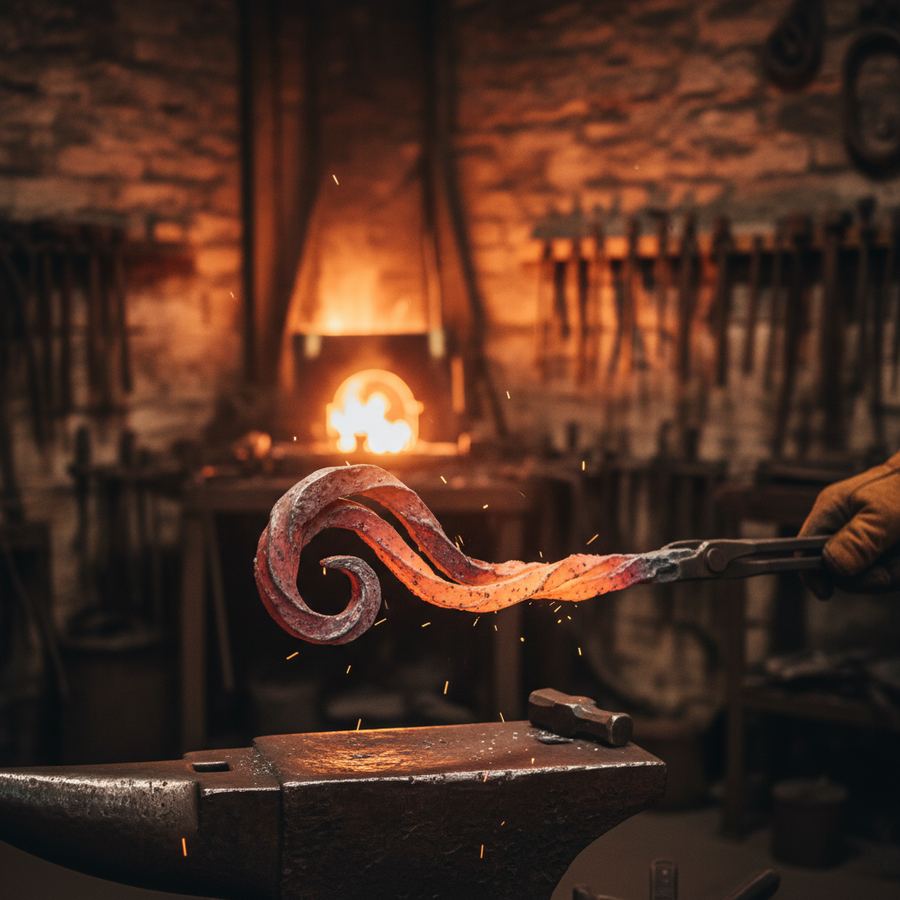
The barriers women face in blacksmithing are a mix of practical challenges and cultural assumptions. On the practical side, much of the existing equipment was designed with larger male bodies in mind. Anvil heights, hammer weights, tong sizes, and forge configurations may need adjustment to work comfortably for smaller-framed smiths of any gender. These are solvable problems, and many experienced women smiths have developed modifications and techniques that work for them, but beginners may not know these solutions exist.
The cultural barriers are harder to quantify but no less real. Walking into a forge for the first time and being the only woman in the room takes a certain confidence. Assumptions about physical capability, sometimes spoken, sometimes not, can be discouraging. The "you are pretty strong for a girl" comment, however well-intentioned, reminds women that they are seen as exceptions rather than participants. These dynamics are not unique to blacksmithing. They exist across the trades and many craft disciplines. But in a field as physically demanding and traditionally masculine as forging, they can be particularly pronounced.
Strength, Technique, and the Hammer Myth
One of the most persistent misconceptions about blacksmithing is that it requires brute strength. It does require fitness and stamina, but effective forging relies far more on technique, timing, and heat management than on raw power. A well-placed hammer blow at the right temperature moves more steel than a heavy, poorly aimed strike on cooling metal. Experienced smiths of all sizes know this. They let gravity, leverage, and the elastic properties of the hammer handle do much of the work.
Power hammers and hydraulic presses, standard equipment in most professional shops, further level the physical playing field. These tools allow any smith to move heavy stock efficiently without relying on manual hammering alone. The idea that blacksmithing is only for the physically large is not just inaccurate; it discourages talented people from ever picking up a hammer. The truth is that good smithing rewards precision, patience, and material understanding above all else.
Building Community and Visibility
Several organizations and informal networks have emerged to support women in blacksmithing across North America. Women-only workshops and hammer-ins provide spaces where newcomers can learn without the added pressure of being a gender minority. Online groups and social media communities connect women smiths across vast distances, sharing techniques, encouragement, and job opportunities. In Canada, where geography can isolate makers in rural and remote areas, these digital connections are especially valuable.
Visibility matters enormously. When a young woman sees another woman working confidently at the forge, producing excellent work and running a successful business, the mental barrier drops. Representation in exhibitions, on workshop faculty lists, and in media coverage of the craft signals that blacksmithing is not a closed club but an open invitation. Every woman who demonstrates at a conference or posts her work online is, whether she intends it or not, expanding the range of who gets to be a blacksmith.
What Women Bring to the Anvil
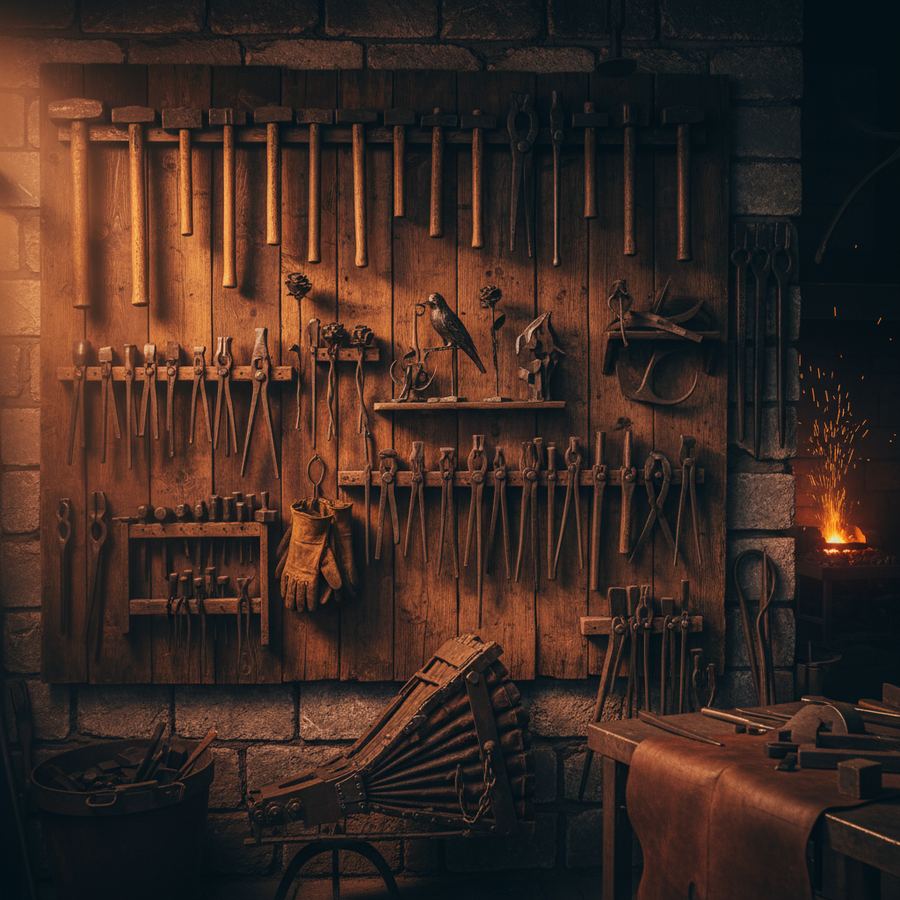
It would be reductive to claim that women's blacksmithing looks fundamentally different from men's. The forge does not care who holds the tongs. But diversity of perspective always strengthens a creative field. Women entering blacksmithing bring different life experiences, aesthetic sensibilities, and ideas about what the craft can be and who it can serve. Some of the most innovative work in Canadian art blacksmithing is being produced by women who came to the craft from other disciplines, bringing influences from textile arts, ceramics, industrial design, and fine art that enrich the vocabulary of forged metalwork.
The growth of women in blacksmithing is also changing the culture of the shop floor. Studios and workshops that welcome women tend to be better organized, more safety-conscious, and more attentive to ergonomics. These improvements benefit everyone, not just women. A forge that is set up for comfort and efficiency serves all its users better than one designed on the assumption that discomfort is just part of the job.
Looking Ahead
The trajectory is clear and encouraging. More women are entering blacksmithing in Canada every year. More are staying, building practices, and gaining recognition. The craft is richer for their participation, and the community is stronger for its growing inclusiveness. There is still work to do. Workshop spaces need to be designed with diverse bodies in mind. Language and culture in the forge need to keep evolving. And the simple act of welcoming newcomers warmly, regardless of who they are, remains the most powerful tool for growing the craft.
The anvil is open to everyone. The more hands that reach for the hammer, the more vital and creative Canadian blacksmithing will become.