Metal Arts Guild | October 17, 2025
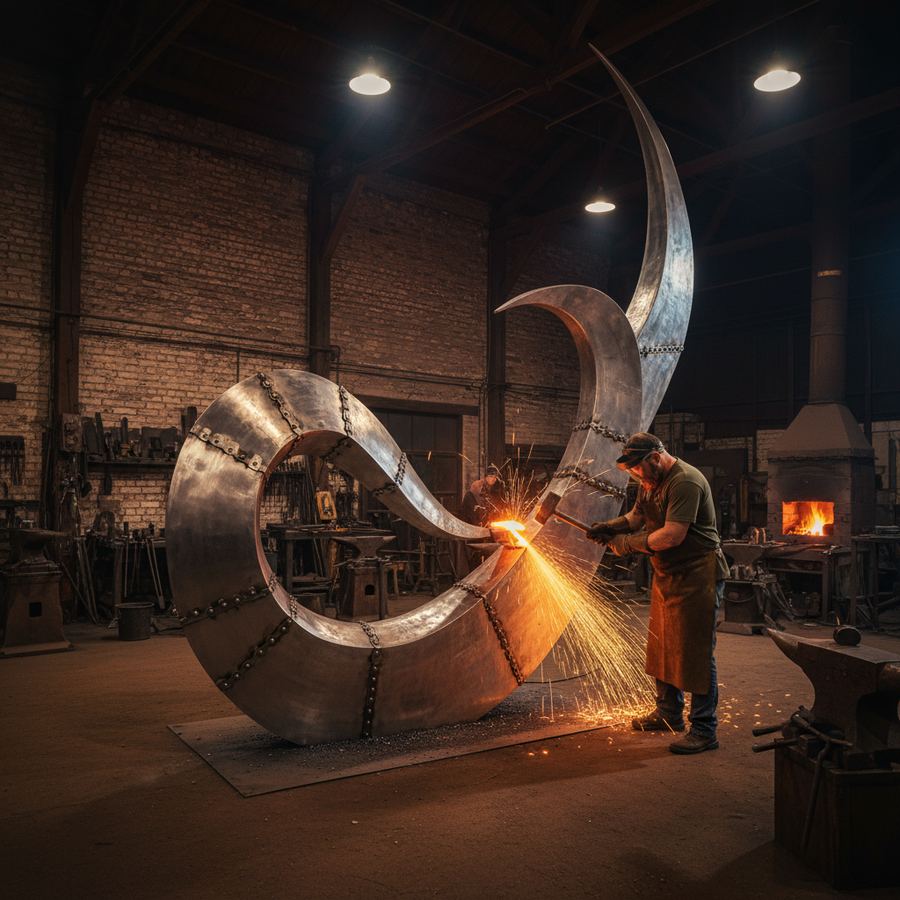
Metal sculpture has become one of the defining features of public art in Canada. Drive through any major city or even a mid-sized town and you are likely to encounter steel, copper, aluminum, or bronze standing in a park, plaza, or along a waterfront trail. These works range from towering abstract forms to figurative pieces that tell local stories. What unites them is the choice of metal as a primary material, a choice driven by durability, scale, and the expressive power that metals offer in outdoor settings.
The tradition of public sculpture in Canada stretches back to the war memorials and civic monuments of the late nineteenth and early twentieth centuries, most of which were cast in bronze. What distinguishes the contemporary era is the range of metals and techniques in use, and the shift from commemorative function to broader artistic expression. Today's public metal sculptures may celebrate local history, respond to landscape, provoke thought, or simply delight the eye with form and movement.
Corten Steel and the Canadian Landscape
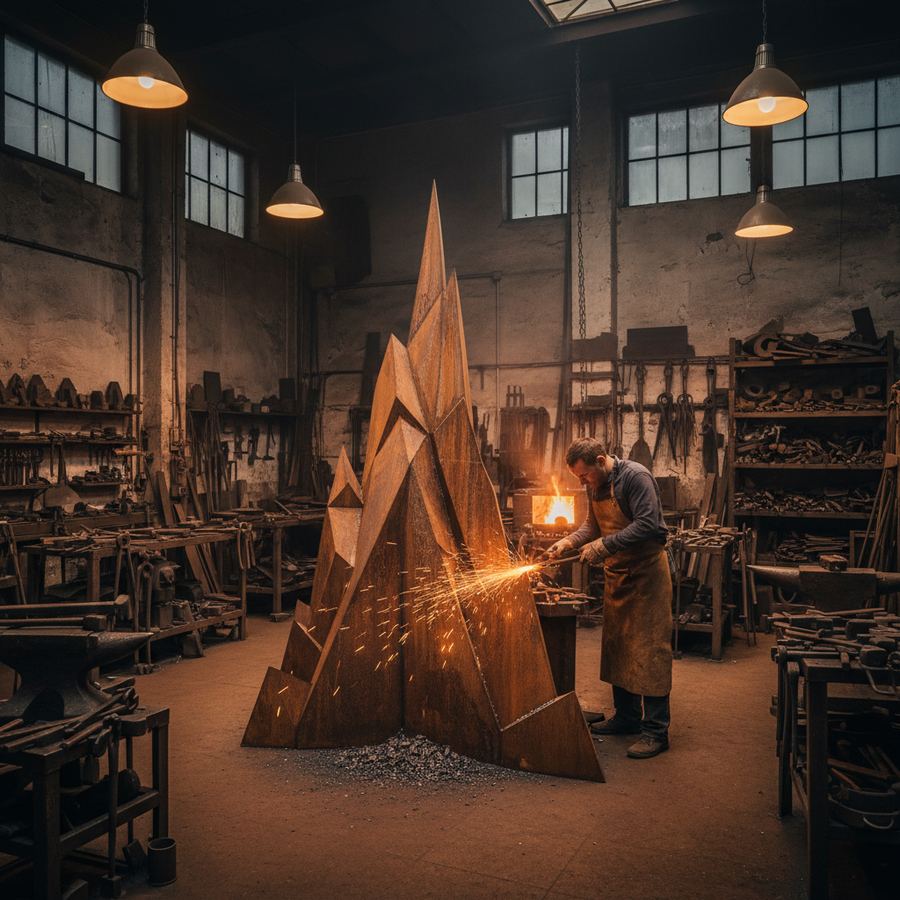
Corten steel, also called weathering steel, has become one of the most popular materials for outdoor metal sculpture in Canada. Its characteristic rusty orange patina, which forms naturally when the steel is exposed to weather, creates a protective layer that prevents deeper corrosion. The warm, earthy colour of aged Corten complements the Canadian landscape beautifully, harmonizing with autumn foliage, prairie grasses, and the red-brown earth of many regions.
Artists working in Corten often use plasma cutting and welding to create large panels and assembled forms. The material is heavy and requires engineering consideration for wind load and foundation, but it rewards ambition. Some of the most striking pieces in Canadian public collections are Corten walls and screens with laser-cut patterns that cast intricate shadows on the ground. Others are massive volumetric forms, hollow or solid, that shift in appearance as the viewer walks around them and as the light changes through the day.
How Public Art Programs Work
Most public metal sculpture in Canada is commissioned through percent-for-art programs, where a fixed percentage of a new building or infrastructure project's budget is allocated to public art. Municipal, provincial, and federal programs all participate. The process typically involves an open call, a jury of artists and community members, a shortlist, maquette presentations, and final selection. From commission to installation, a major public sculpture project can take two to four years.
For metal artists, these commissions represent some of the most significant opportunities available. The budgets, while rarely lavish, allow for work at a scale that gallery sales alone cannot support. A public commission also provides visibility and legitimacy that benefits an artist's career in lasting ways. The piece stands in view of thousands of people daily, serving as a permanent portfolio entry and a conversation starter that no gallery show can match.
The process has its frustrations. Competition is stiff, the bureaucratic requirements can be extensive, and the timeline from selection to installation is long. Artists must navigate engineering reviews, foundation requirements, safety codes, and community consultations that do not apply to gallery work. But for those with the patience and organizational skills to manage these demands, public commissions are deeply rewarding.
Regional Voices in Metal
Public metal sculpture in Canada reflects regional identity in fascinating ways. On the West Coast, marine themes are common: fish, waves, canoes, and coastal plants rendered in steel and bronze. In the Prairies, the flat horizon invites vertical works that punctuate the skyline, and agricultural references, grain, tools, and livestock, appear frequently. In Central Canada, abstract and conceptual approaches are more prevalent, influenced by proximity to major galleries and academic art programs. In Atlantic Canada, connections to the sea, fishing heritage, and the rugged landscape drive much of the sculptural work.
These regional flavours are not rigid boundaries but tendencies shaped by landscape, community, and the artists who happen to live and work in each place. A British Columbia metal artist may produce work that would feel at home on the Prairies, and vice versa. The diversity of approaches is one of the strengths of Canada's public art landscape.
Forged Elements in Public Work
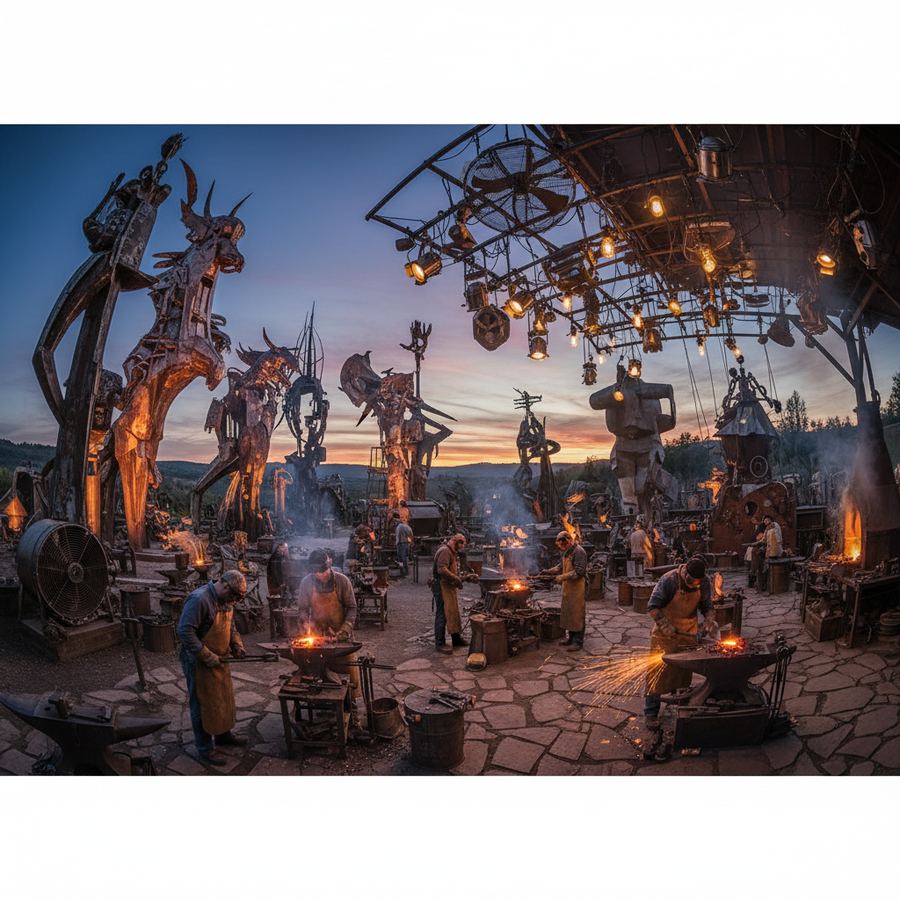
While most large-scale public metal sculpture relies on welding and fabrication, forged elements are increasingly finding their way into public installations. Blacksmiths working at an architectural scale contribute hand-forged railings, gates, and decorative hardware to public buildings and parks. Some public sculptures incorporate forged components alongside welded structure, combining the organic quality of hammer work with the efficiency of fabrication.
This integration of forging and fabrication reflects a broader trend in the metal arts toward hybrid approaches. Few contemporary metal artists limit themselves to a single technique. The most compelling public work often combines methods, using whichever process best serves each element of the design. A sculpture might have a fabricated Corten base, welded stainless steel structural members, and hand-forged ornamental details, all working together in a unified whole.
Durability and Stewardship
One of the practical advantages of metal sculpture in public settings is durability. Steel, properly finished and maintained, can withstand Canadian winters, salt spray, UV exposure, and the inevitable wear of public interaction for decades. Bronze is essentially permanent. Even Corten, which relies on controlled surface corrosion, is remarkably long-lived when correctly detailed to manage water drainage and avoid galvanic reactions with other metals.
Maintenance is an ongoing consideration. Many municipalities have learned the hard way that public art requires a stewardship plan and a maintenance budget. Painted steel needs periodic recoating. Bronze develops patina that may or may not be desirable. Kinetic sculptures with moving parts need lubrication and mechanical attention. The best public art programs build these costs into their planning from the outset, ensuring that the work continues to look its best years after installation.
The Future of Public Metal Art
Interest in public metal sculpture across Canada shows no sign of slowing. New transit projects, urban developments, and park revitalizations continue to generate commissions. There is also growing interest in temporary and semi-permanent installations, sculpture trails and pop-up exhibitions that bring metalwork into public space without the permanence and expense of a full commission. These formats offer opportunities for emerging artists who may not yet have the track record to compete for major permanent installations.
As cities grow and evolve, the role of public art in shaping urban experience becomes ever more important. Metal sculpture, with its capacity for scale, permanence, and visual power, is uniquely suited to that role. The welding artists and metalworkers creating these pieces are not just decorating public space. They are defining it.