Regan Chicken | Prince Edward Island | Jewellery and Metalsmithing
About the Practice
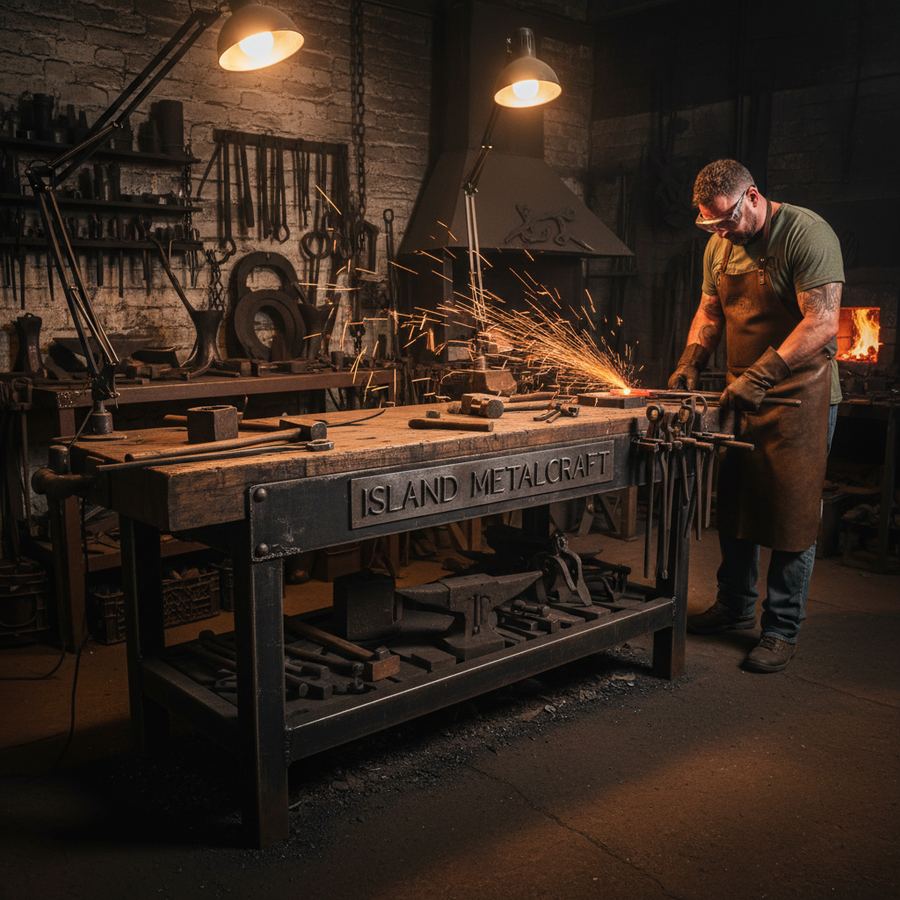
Island Metalcraft operates from a small studio attached to a century-old farmhouse outside North Rustico, Prince Edward Island. Metalsmith and jeweller Regan Chicken has worked from this space since 2013, producing hand-forged jewellery, raised copper and silver vessels, and small-scale sculptural objects that reflect the landscape and material culture of the island. The studio is modest in size but precisely equipped, with a jeweller's bench, a small forge, a hydraulic press, and a comprehensive collection of hammers, stakes, and forming tools that Regan has assembled over more than a decade of practice. Through the workshop window, the view across rolling farmland to the dunes and the Gulf of St. Lawrence provides a daily reminder of the environment that shapes the work.
Regan came to metalsmithing through a circuitous route. She studied environmental science at the University of Prince Edward Island, expecting a career in conservation or resource management. During her final year, she enrolled in a jewellery elective taught by a visiting instructor from NSCAD University and discovered an unexpected affinity for working with metal at a small scale. The precision, the material responsiveness, and the meditative focus required by benchwork appealed to aspects of her temperament that fieldwork did not. After graduating, she spent two years studying metalsmithing and jewellery design at George Brown College in Toronto, then returned to PEI determined to build a studio practice on the island.
Jewellery
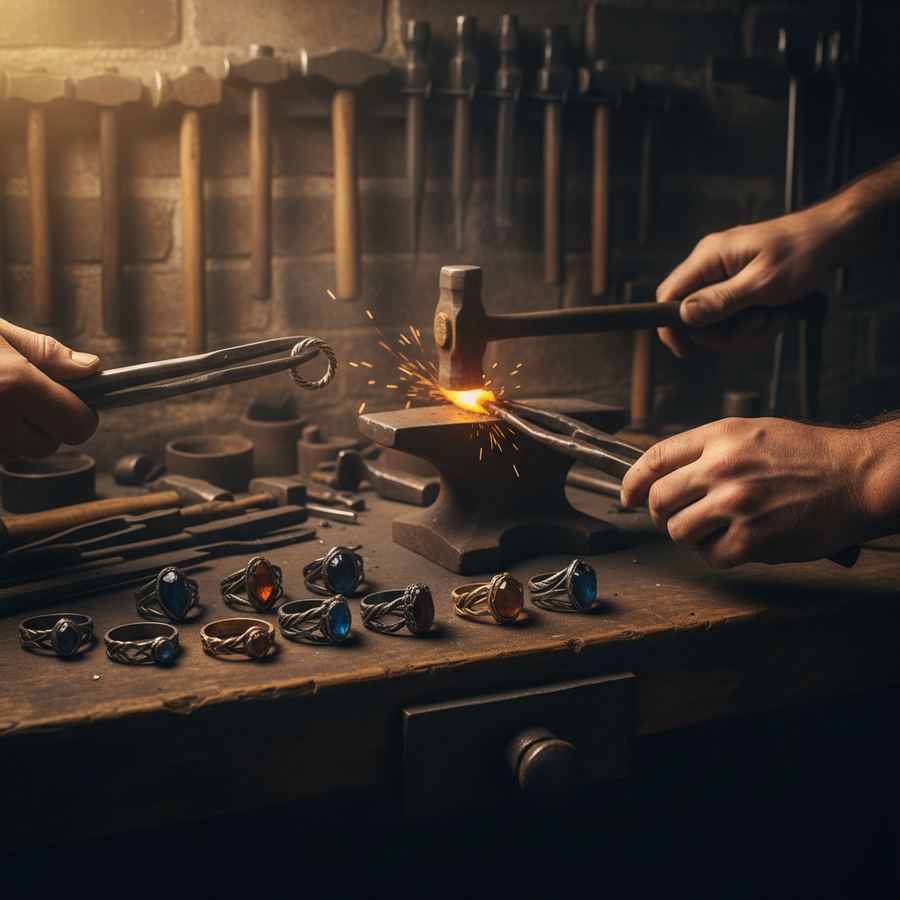
Jewellery forms the foundation of Island Metalcraft's output. Regan works primarily in sterling silver, with accents of copper, brass, and occasionally gold. Her designs draw on the natural forms of the island: beach stones, mussel shells, sea glass, dune grasses, and the textures of weathered wood and rusted iron found along the shoreline. These references are rendered through metalsmithing techniques rather than literal reproduction. A ring inspired by a beach stone might feature a smooth, domed bezel setting with a subtly hammered band, its proportions echoing the stone's oval form without imitating it. A pair of earrings referencing dune grass might consist of slender tapered silver rods, their surfaces lightly planished to catch light in the way that grass blades do in the wind.
Regan's technical repertoire includes fabrication, soldering, stone setting, forging, etching, and basic casting using the lost-wax process. She also employs fold forming, a technique developed by the late Canadian metalsmith Charles Lewton-Brain, which produces complex three-dimensional forms from flat sheet metal through a sequence of folding, annealing, and unfolding. Fold-formed elements appear in several of her jewellery lines, contributing an organic fluidity that complements the more controlled geometry of her fabricated work. The combination of techniques gives the collection visual variety while maintaining a consistent material sensibility rooted in silver and copper.
Raised Vessels
Beyond jewellery, Regan has developed a practice in raised metalwork, producing bowls, cups, and vases from copper and silver sheet. Raising is an ancient technique in which a flat disc of metal is gradually shaped into a hollow form through repeated courses of hammering over a steel stake, with intermittent annealing to relieve work hardening. It is slow, physically demanding, and deeply satisfying work. A single copper bowl might require ten or more courses of raising, each consisting of hundreds of hammer blows, before the form reaches its intended profile. The process leaves a characteristic pattern of overlapping hammer marks on the interior surface, a record of the making that Regan preserves rather than polishing away.
Her vessels tend toward simple, generous forms: wide-mouthed bowls with gently curving walls, tapered vases that flare at the lip, and low cups with weighted bases that feel solid and grounded in the hand. Surface treatments vary. Some pieces are left with a bright copper finish that will patinate naturally over time. Others are treated with chemical patinas to produce blue-green, brown, or black surfaces. A few are selectively polished to create contrasts between bright and dark areas that accentuate the vessel's curves. Regan sees the vessel as a fundamental form in metalsmithing, one that connects contemporary makers to thousands of years of tradition while remaining open to individual interpretation.
The vessel work has earned recognition within the Canadian craft community. Regan's copper and silver pieces have been exhibited at the Charlottetown Festival of Craft, the Nova Scotia Designer Crafts Council Gallery in Halifax, and the Canadian Craft Biennial. She was awarded a PEI Arts Council emerging artist grant in 2016, which funded the purchase of the hydraulic press that significantly expanded her forming capabilities. The press allows her to produce anticlastic forms, saddle shapes, and compound curves that would be extremely difficult to achieve with hammering alone, and it has opened new directions in both her vessel work and her jewellery.
Small-Scale Sculpture and Objects
A third stream of work at Island Metalcraft consists of small-scale sculptural objects and functional art. These include forged and fabricated candleholders, desk accessories, ornamental boxes, and sculptural forms inspired by marine organisms. A series of sea urchin sculptures, fabricated from copper sheet using raising and chasing techniques, has been particularly well received. Each urchin is hollow and perforated, allowing it to function as a candle shade that casts spiny patterns of light on surrounding surfaces. The combination of natural form, material craft, and functional purpose in these objects exemplifies Regan's approach to making: every piece should reward both looking and use.
Regan also produces a seasonal line of ornaments and small gift items for the holiday market. These include copper tree ornaments, silver snowflake pendants, and miniature forged hooks and trivets. The seasonal work provides a reliable revenue stream that supports the studio through the quieter winter months, and Regan approaches it with the same attention to quality and design that she brings to her exhibition pieces. She is aware that for many customers, a holiday ornament or a small pendant will be their first encounter with hand-forged metalwork, and she wants that encounter to be memorable.
Island Life and Studio Practice
Operating a metalsmithing studio on Prince Edward Island presents particular challenges and opportunities. The island's small population limits the local market for handmade jewellery and metalwork, and the seasonal tourism economy concentrates sales into the summer months. Regan has adapted by developing multiple sales channels: her own studio, craft fairs and festivals across the Maritimes, consignment in select galleries and shops, and a growing online presence. She also teaches workshops in basic jewellery making and copper raising, both at her studio and through community education programs. These workshops serve as both income and outreach, introducing new audiences to the possibilities of hand-worked metal.
The compensations of island life are substantial. Studio rent is a fraction of what it would cost in Toronto or Vancouver. The pace of life supports the focused, unhurried work that raising and forging demand. The landscape provides constant inspiration, and the close-knit community of PEI craft makers offers mutual support. Regan is a member of the PEI Crafts Council and participates in the annual island-wide studio tour, which brings hundreds of visitors through her workshop each September. She maintains connections with the broader Canadian metal arts community through exhibitions and social media, where her process videos have attracted a following among jewellery students and aspiring metalsmiths.
Material and Meaning
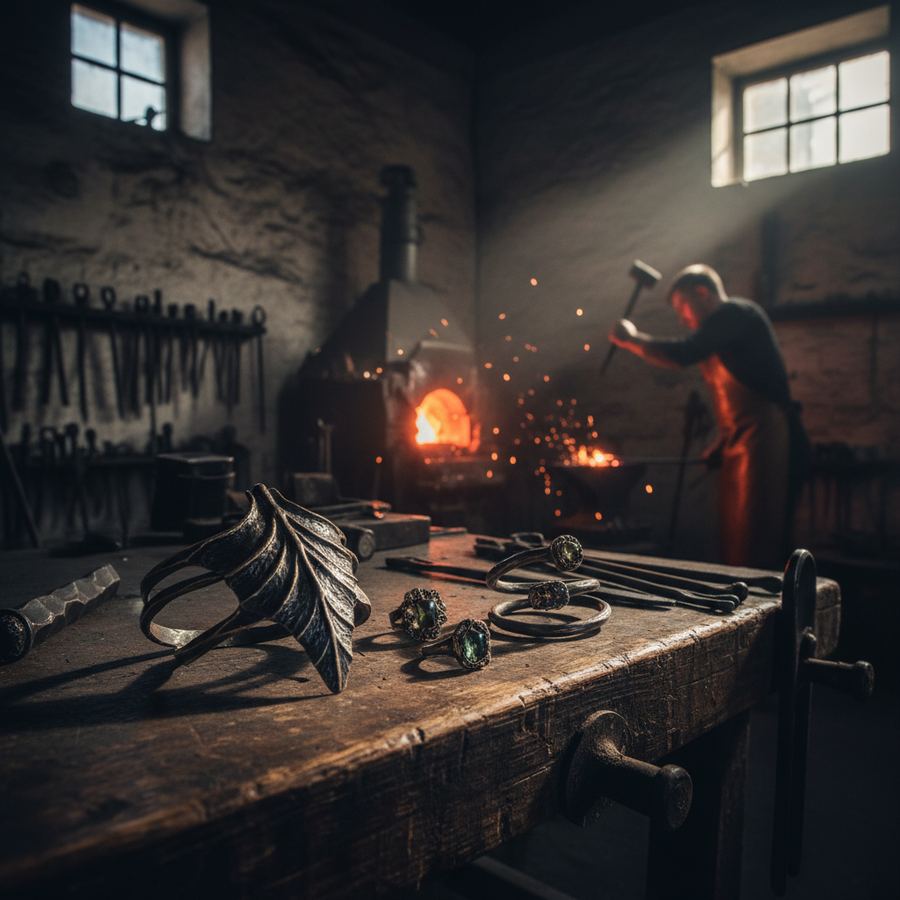
At the heart of Regan's practice is a conviction that handmade metal objects carry meaning beyond their material value. A hand-raised copper bowl or a carefully forged silver ring represents an investment of time, skill, and intention that connects the maker to the user through the object itself. Many of her customers become long-term collectors who return year after year, building personal collections that mark significant moments in their lives. A wedding ring, a birthday pendant, an anniversary bowl: these objects accumulate emotional significance over time, and the quality of their making ensures that they endure.
Her engagement with metal art and craft traditions extends beyond her own practice. She has contributed to discussions about the role of craft in contemporary Canadian culture, arguing that handmade objects are necessary counterweights to the disposability of industrial production. This position resonates in Atlantic Canada, where traditions of making and mending remain strong and where the economic pressures of globalization have made the value of local production especially visible. Island Metalcraft, working from its farmhouse studio in the red-clay landscape of PEI, is a quiet argument for the continued relevance of the hand and the hammer in a digital age.
Current projects include a commissioned set of liturgical vessels for a Charlottetown church, a new line of heritage-inspired copper kitchenware, and preparations for a solo exhibition at the Confederation Centre Art Gallery. The exhibition will present a decade of work alongside new pieces, offering the most comprehensive view of Island Metalcraft's evolution to date. For Regan, the exhibition is both a milestone and a starting point.