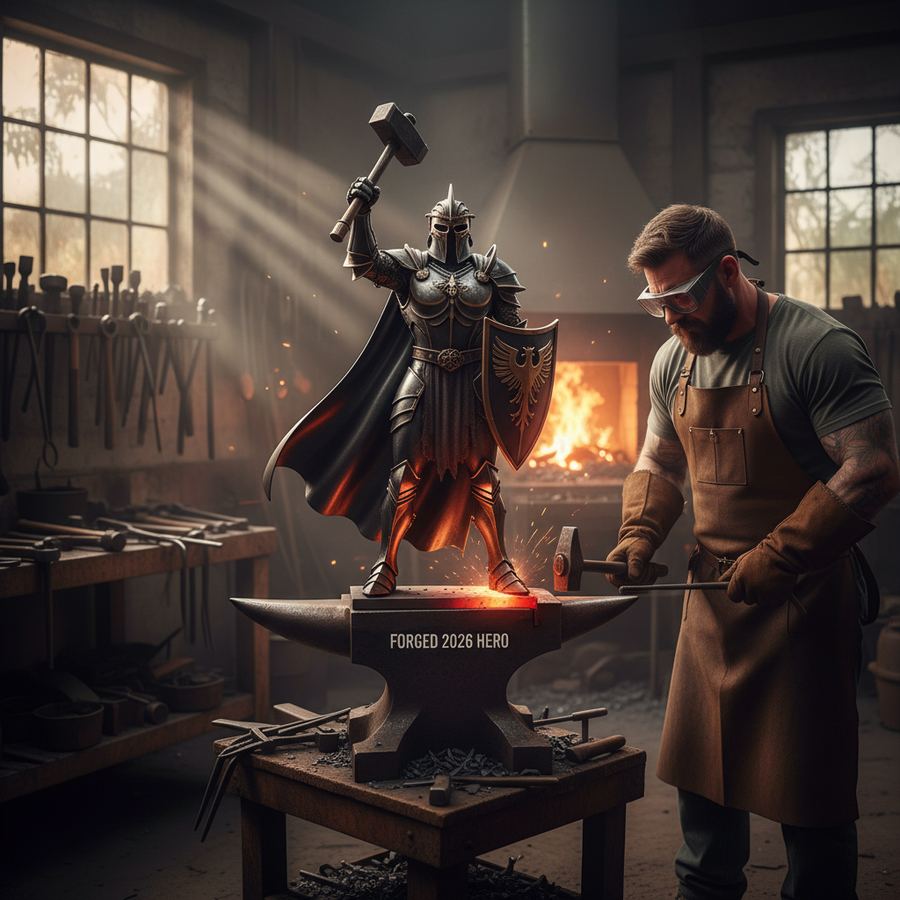
Canada's premier juried showcase for blacksmithing, metal sculpture, and forge-based art
A National Gathering at the Anvil
Forged 2026 is the Metal Arts Guild of Canada's flagship juried exhibition, held every two years to celebrate the breadth and depth of forge-based art across the country. This year's edition brings together more than sixty makers from ten provinces and two territories, presenting work that spans architectural ironwork, sculptural steel, Damascus blade smithing, copper raising, jewellery metalsmithing, and welded assemblage. The exhibition occupies the main gallery halls of the Canadian Clay and Glass Gallery in Waterloo, Ontario, running from May 9 through August 2, 2026. It is the largest dedicated showing of hand-forged and fabricated metalwork ever mounted in Canada, and it arrives at a moment when public interest in craft-based art is surging.
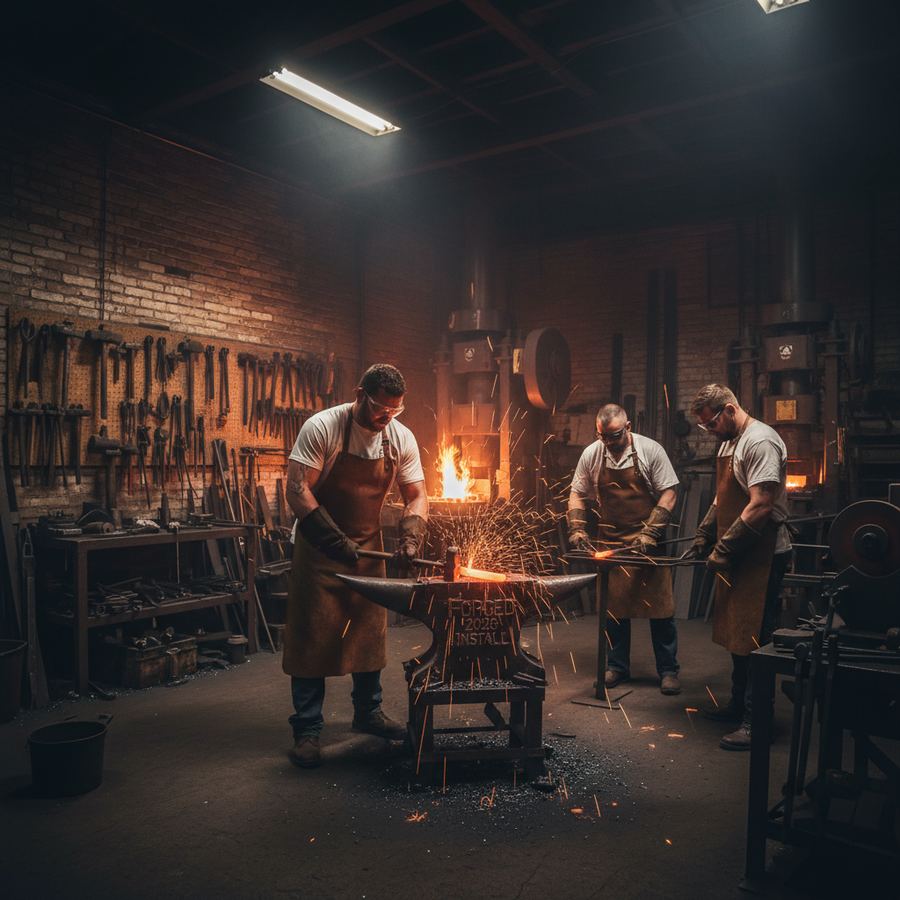
The jurying process for Forged 2026 was rigorous and deliberately inclusive. A panel of five jurors reviewed over three hundred submissions, evaluating technical execution, conceptual strength, and material integrity. The jurors included practising blacksmiths, gallery curators, and a public art commissioner, ensuring that work was assessed from multiple perspectives rather than filtered through a single aesthetic lens. The resulting selection reflects the full spectrum of the Canadian metal arts community: production smiths who forge hardware and tools alongside sculptor-fabricators who build large-scale installations, and jewellery metalsmiths whose pieces measure in millimetres rather than metres.
What Visitors Will See
The exhibition is organized into four thematic sections. The first, titled Heat and Hammer, focuses on traditional forging. Here, visitors encounter hand-forged railings, fire tools, candelabra, and botanical ironwork created using techniques that have changed very little in five centuries. The emphasis is on directness: each piece shows the marks of the hammer, the taper of a drawn point, and the subtle asymmetry that distinguishes handwork from machine production. Several of the smiths in this section have trained under European masters and bring old-world joinery methods to Canadian material and subject matter.
The second section, Constructed Forms, highlights fabricated and welded sculpture. These are works built from sheet, plate, tube, and found steel, assembled through MIG, TIG, and oxy-acetylene welding rather than forging alone. The pieces range from wall-mounted reliefs to freestanding figures over two metres tall. Many incorporate mixed metals, combining weathered Corten steel with polished stainless, brass, and copper to create rich surface contrasts. This section connects directly to the growing interest in welding as a creative discipline rather than a purely industrial skill.
The third section, Edge and Point, is devoted to blade smithing and tool making. Canadian knife makers have earned international recognition in recent years, and Forged 2026 gathers some of the finest examples of their work. Visitors will see chef's knives with hand-forged Damascus blades and stabilized burl handles, hunting knives designed for northern conditions, and reproduction Viking-era blades forged from bloom iron. Alongside the knives are forging hammers, tongs, and specialty tools made by smiths for smiths, demonstrating that toolmaking itself is an art form with its own aesthetic standards.
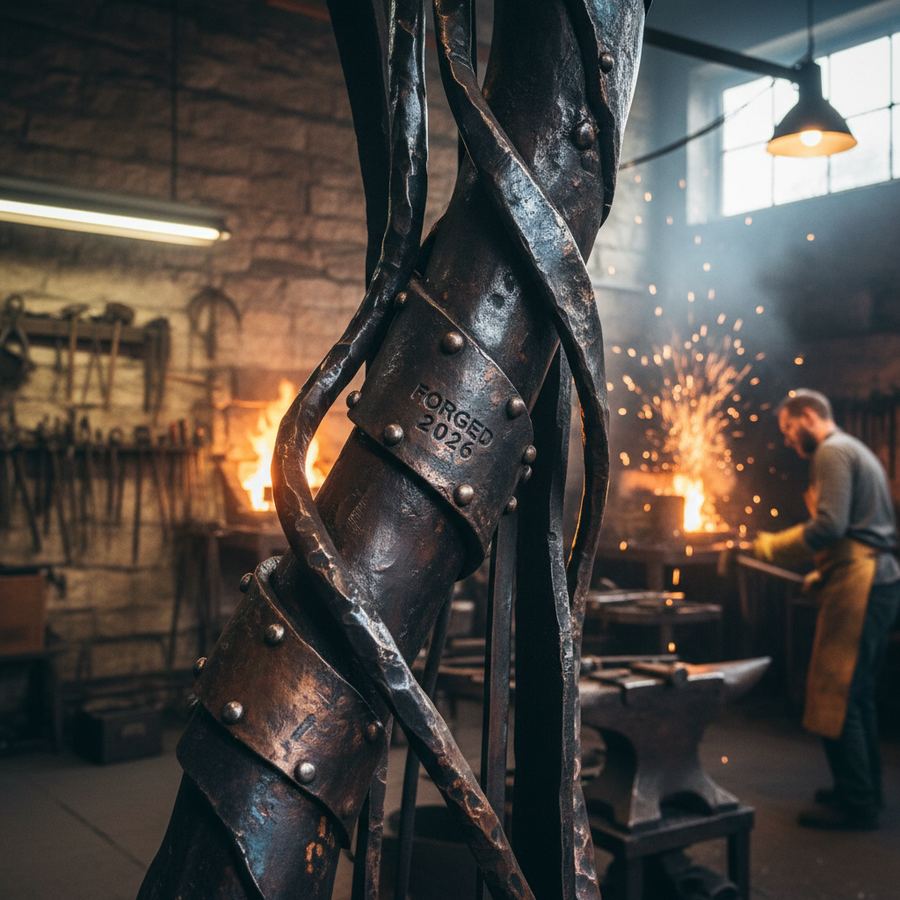
The final section, Adornment, features jewellery and small-scale metalsmithing. Rings, brooches, pendants, and bracelets made from silver, gold, copper, and steel sit in custom vitrines that allow visitors to examine fine detail up close. Several of the jewellery artists in this section also practise blacksmithing, and their wearable work carries the same forged quality found at much larger scales. It is a reminder that metalsmithing is a single discipline expressed across a vast range of sizes, and that the skills learned at a jewellery bench are not so different from those practised at an anvil.
Programming and Events
Forged 2026 is more than a static display. The exhibition includes a full schedule of live demonstrations, artist talks, and hands-on workshops. On the opening weekend, three featured smiths will set up portable forges on the gallery grounds and demonstrate basic techniques for the public, giving visitors a chance to see hot metal shaped in real time. Throughout the run, Saturday afternoon talks allow exhibiting artists to discuss their processes, influences, and the practical realities of sustaining a metal arts practice in Canada. A dedicated youth workshop day invites young people aged twelve to seventeen to try their hand at basic forging under supervision, an initiative designed to introduce the next generation to the craft.
Panel discussions address broader themes facing the community. One session examines the economics of commission-based metalwork, exploring how smiths price labour-intensive work in a market accustomed to factory-made alternatives. Another considers the environmental footprint of forge work, looking at fuel choices, material sourcing, and the inherent sustainability of a craft that produces almost no waste. A third panel focuses on mentorship and apprenticeship, asking how knowledge is passed between generations when formal guild structures have largely disappeared.
Exhibiting Artists
The roster of participating artists reads like a directory of the Canadian metal arts scene. Ontario is well represented by studios such as Forge and Flame, whose architectural ironwork and sculptural furniture appear in the Heat and Hammer section. Western Canada contributes several makers, including Alberta-based Iron Ridge Studio, known for large-scale Corten landscape sculpture. From the Atlantic provinces, Harbour Metals in Nova Scotia presents marine-themed forged panels and architectural hardware. Quebec's Northern Anvil brings heritage restoration ironwork alongside original ecclesiastical commissions. Each artist profile on our site offers deeper background, studio images, and links to their broader body of work.
Forged 2026 is also the occasion for the Guild's biennial awards. Jurors will select recipients for Best in Show, Best Emerging Maker, and Best Collaborative Work, with results announced at the opening reception. Past winners have gone on to significant public commissions and international residencies, making the award a meaningful milestone in a metalsmith's career.
Visiting the Exhibition
The Canadian Clay and Glass Gallery is located at 25 Caroline Street North in Waterloo, Ontario. Admission is by donation, and the gallery is wheelchair accessible throughout. Hours are Monday through Saturday, 10 a.m. to 5 p.m., and Sunday, 1 p.m. to 5 p.m. Group tours are available by advance booking through the gallery's education department. The Canadian Clay and Glass Gallery website has full details on accessibility, parking, and transit options. For those unable to visit in person, a full digital catalogue with high-resolution images and artist statements will be published on this site following the opening. Browse our exhibitions hub for details on other current and upcoming shows. If Forged 2026 sparks your interest in trying the craft yourself, explore our introductory blacksmithing weekend listings to find a session near you.